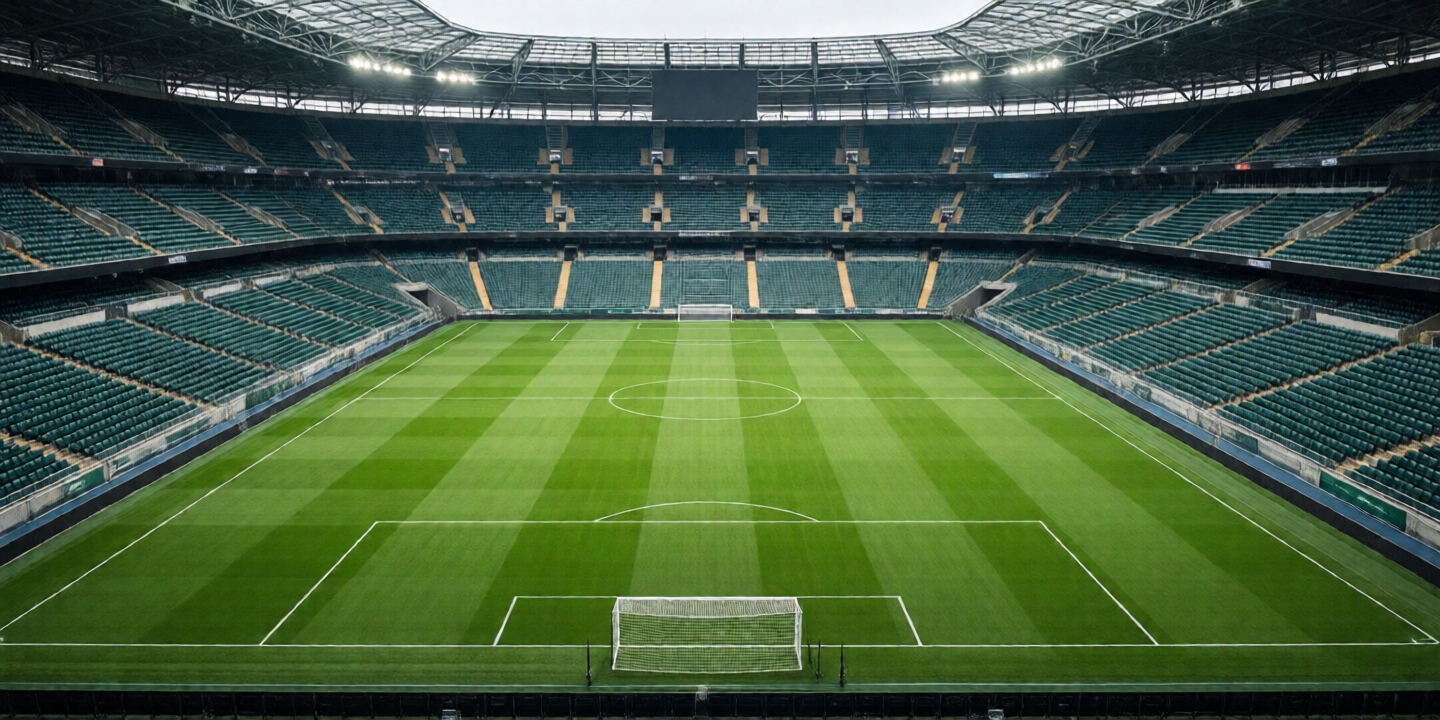
Why Football 2026 Rewrites Everything
Football 2026 World Cup will be the first men’s FIFA World Cup with 48 teams, 104 matches, and three host countries: Canada, Mexico, and the United States. The tournament runs from June 11 to July 19,...
Why Football 2026 Rewrites Everything
Football 2026 World Cup will be the first men’s FIFA World Cup with 48 teams, 104 matches, and three host countries: Canada, Mexico, and the United States. The tournament runs from June 11 to July 19, 2026, with the opening match in Mexico City and the final at MetLife Stadium in New Jersey. FIFA has divided the competition into 12 groups of four, followed by a Round of 32, creating a longer route to the trophy and more opportunities for upsets. Host cities range from Toronto and Vancouver to Miami, Atlanta, Dallas, Los Angeles, and Seattle, while travel distances may materially affect squad rotation, recovery, and match predictions. Pitch Notes tracks team tactics, player statistics, fixtures, and daily tournament developments for football fans and responsible sports-analysis readers. Start by mapping your preferred teams, venues, and match windows before interpreting forecasts or planning travel.

Photo by El gringo photo on Pexels
The pain point is obvious: following the football 2026 World Cup sounds simple until you see the scale. Forty-eight national teams, 16 host-city markets, 39 tournament days, and a North American map stretching across multiple time zones mean that one missed scheduling detail can distort your entire viewing plan. Listen up — this is the part that matters: the tournament is not merely a larger version of Qatar 2022. It changes the probability landscape. More teams increase the chance of surprise results, while the additional knockout round raises the cost of a slow start for every contender.
The official FIFA World Cup 26 tournament overview confirms the central framework, but raw match volume does not tell the complete story. Canada, Mexico, and the United States bring different climates, travel patterns, stadium surfaces, and football cultures into one competition. A practical supporter therefore needs two plans: one for the matches themselves and another for the conditions surrounding them. Pitch Notes is built around that distinction, combining football 2026 World Cup coverage with match predictions, tactical analysis, player statistics, and tournament news rather than reducing every fixture to a single headline.
Want the tournament basics in one place before the action accelerates?
Step 1: Map the 2026 World Cup format
The 2026 World Cup format contains 48 teams divided into 12 groups of four, with 104 total matches scheduled from June 11 through July 19. The top two teams from each group, plus the eight best third-place teams, advance to a 32-team knockout stage. This structure gives strong teams more margin for error but adds one elimination round before the traditional Round of 16.
That mathematical change deserves attention. In a 32-team tournament, the group stage normally sends 16 teams forward; in 2026, 32 teams survive, so the qualification threshold may become more volatile. A team could theoretically progress with a modest points total if results across other groups break favorably, while a third-place side with four points may still face uncertainty because ranking comparisons involve goal difference, goals scored, disciplinary records, and tournament regulations. The exact tie-breaking order should always be checked against FIFA’s published competition rules rather than assumed from a previous edition.
The competition also creates a new tactical question: does a cautious first match become more rational? For many seeded teams, the expected value of avoiding defeat may rise because there are more qualification routes. However, the Round of 32 means finishing first can remain strategically important, since group position determines the knockout bracket and opponent pathway. That is why Pitch Notes evaluates not only win probability but also incentives, squad depth, and likely rotation. A prediction that ignores the format is mathematically incomplete.
- Group stage: 12 groups of four teams.
- Advancement: 32 teams reach the knockout phase.
- Knockout route: Round of 32, Round of 16, quarter-finals, semi-finals, and final.
- Tournament size: 104 matches across 39 days.
- Opening match: Mexico City on June 11, 2026.
- Final: MetLife Stadium in the New York/New Jersey region on July 19, 2026.
For a plain-language explanation of qualification scenarios, explore our [Internal Link: 2026 World Cup format guide]. The key is to separate what is confirmed from what remains dependent on the final draw, qualification results, and FIFA scheduling announcements.
Step 2: How should you compare host cities and stadiums?
You should compare host cities through three variables: travel burden, local conditions, and stadium access. Canada, Mexico, and the United States will host matches in 16 cities, including Toronto, Vancouver, Mexico City, Atlanta, Dallas, Houston, Los Angeles, Miami, New York/New Jersey, and Seattle. Those differences can influence recovery time and match-day preparation even when two teams have similar technical quality.
The host-city list is not decorative; it is a performance variable. Mexico City’s altitude presents a different physical environment from coastal Miami, while Vancouver, Seattle, and Toronto may bring different temperatures and travel patterns from Dallas, Atlanta, or Los Angeles. Teams also face long air routes between fixtures, and that can change training schedules, sleep management, and the usefulness of a deep bench. The United States Soccer Federation and local host committees provide venue information, but supporters should verify transport rules, entry procedures, and stadium policies close to match day because operational details can change.
Here is an information gain many generic World Cup pages overlook: the same nominal rest period does not create the same practical recovery period. A late evening match followed by a cross-border flight can reduce usable preparation time more than a fixture in the same metropolitan area. Therefore, when comparing teams, mark the sequence of cities rather than looking only at the group table. A squad with two central midfielders capable of controlling tempo may be better positioned for compressed travel than a team dependent on one high-intensity pressing unit.
| Host-country consideration | Why it matters | What to monitor |
|---|---|---|
| Canada | Long north-south travel and varied weather | Flight routes and temperatures |
| Mexico | Altitude and major-city congestion | Acclimatization and kickoff time |
| United States | Large distances between many venues | Recovery, time zones, and rotation |
| All three countries | Different local regulations | Tickets, transport, and stadium entry |
Could a venue change the expected outcome? It can, but never in isolation. A stadium effect should be treated as a small probability adjustment unless supported by evidence such as travel history, altitude exposure, surface preference, or documented injury-management plans. For city-by-city planning, see the [Internal Link: host cities and stadiums guide].
Step 3: Which team factors predict football 2026 World Cup success?
The strongest team assessment combines qualifying performance, recent opponent quality, tactical flexibility, player availability, and tournament logistics. FIFA ranking position can provide context, but it should not replace match-level evidence because rankings compress different schedules and confederation environments into one number. A better prediction asks how a team creates chances, prevents transitions, manages set pieces, and responds after conceding first.
Listen up — this is the part that matters: expected goals are useful, but they are not a crystal ball. A side producing 1.8 expected goals per match may be healthier than one scoring 2.1 goals from unusually efficient finishing, yet neither figure explains whether chances came against elite opponents or weaker defenses. Pitch Notes therefore treats xG, shot locations, pressing actions, possession value, progressive passes, and set-piece efficiency as connected signals. The practical aim is to estimate repeatable performance rather than reward a short streak.
Player roles matter even more during a 39-day event. A national team may have an outstanding starting eleven but limited substitutes at full-back, defensive midfield, or center-forward. Injuries and yellow-card accumulation can turn that imbalance into a decisive weakness. Meanwhile, younger players may offer explosive running but less experience managing a lead. A responsible analyst should record minutes, travel, club workload, and injury reports before updating a view.
Use this checklist when evaluating a contender:
- Chance creation: Are high-quality chances generated centrally or mainly from low-probability crosses?
- Defensive transition: How often does the team concede after losing possession?
- Set pieces: Can the side score or defend corners against physically strong opponents?
- Bench value: Are replacements tactically compatible with the starters?
- Game-state control: Does the team improve or deteriorate after taking the lead?
- Schedule fit: Does the route minimize travel and difficult recovery windows?
One contrarian conclusion follows from this framework: the most talented team may not be the best tournament team. In a 48-team field, adaptability can have greater expected value than peak attacking quality because opponents, venues, and tactical problems change rapidly. Read the [Internal Link: team tactics and player statistics hub] before trusting any single prediction.
Ready to compare contenders through evidence rather than reputation?

Photo by Franco Monsalvo on Pexels
Step 4: How can you follow matches without missing crucial context?
You can follow the football 2026 World Cup efficiently by building a fixture dashboard that combines kickoff time, venue, group position, broadcast information, and team news. Do not rely on one social-media feed, because breaking updates may omit whether a player is suspended, rested, injured, or simply absent from a training session. Confirm match details through FIFA’s official fixtures and results pages, then use specialist analysis to interpret what the information means.
The time-zone problem is larger than many fans expect. Matches in Vancouver, Seattle, Los Angeles, Mexico City, Dallas, Atlanta, Miami, Toronto, and New York/New Jersey will not all appear at convenient hours for viewers in Europe, Asia, or Oceania. Create a personal calendar with your local conversion, but preserve the original venue and kickoff time beside it so daylight-saving changes do not create a false certainty. For viewers planning several matches in one day, add at least 30 minutes between broadcast windows for extra time, penalties, post-match analysis, and schedule overruns.
A useful operational method is to assign each match a confidence grade:
- Confirmed: official fixture, venue, and kickoff time published.
- Likely: qualified teams or bracket route known, but draw-dependent details remain.
- Uncertain: qualification, broadcast, or venue information still subject to change.
- Action required: travel, ticket, or accommodation decision has a deadline.
This classification prevents a common failure: treating an early tournament forecast as a confirmed fixture. It also makes the reading experience calmer because you and I can distinguish information from inference. Pitch Notes can provide daily predictions and tactical updates, but the responsible decision is always to verify the underlying fixture and market information before making plans.
Step 5: verification
Verification means checking every important tournament claim against an authoritative source, a current team update, and the date on which the information was published. FIFA should be the first reference for format, fixtures, regulations, and official tournament announcements; host-city committees should confirm local venue details; national federations should clarify squad and injury news. The FIFA legal and competition regulations should take priority over recycled social posts or unattributed screenshots.
A five-minute verification routine can remove a surprising amount of risk:
- Confirm the match date, kickoff time, and venue on FIFA.com.
- Check whether qualification and group-draw details are final.
- Review national-team announcements for injuries and suspensions.
- Compare at least two reputable reports before repeating breaking news.
- Record the publication date beside every forecast or statistic.
- Separate factual information from probability estimates.
- Recheck the information before travel, ticket, or wagering decisions.
Why insist on timestamps? Because squad news has a short half-life. A player listed as doubtful on Monday may train fully on Tuesday, while a late medical decision can alter the tactical matchup within hours. The International Football Association Board’s Laws of the Game also provide the governing framework for match incidents, but tournament-specific regulations may add procedures for ranking, discipline, or competition administration.
The evidence hierarchy should be simple: official FIFA information first, federation or tournament-organizer updates second, reputable journalism third, and anonymous accounts last. If two sources disagree, do not average them as though they were equal measurements; identify which source has direct access and which is repeating a claim. That small discipline protects us from false certainty, which is especially valuable when predictions, travel, and emotional investment collide.
Need a practical way to check the latest details?
Troubleshooting common failures
Common football 2026 World Cup planning failures include outdated fixtures, incorrect time-zone conversions, overconfident predictions, missing squad news, and unrealistic travel schedules. The fix is not more information by itself; it is a repeatable process that ranks information by reliability and records uncertainty. When a claim lacks a source, date, or clear distinction between fact and forecast, treat it as unverified.
Why does a World Cup fixture suddenly look different?
A fixture may change because qualification outcomes, the final draw, venue operations, broadcast planning, or FIFA scheduling requirements are not yet fully settled. Even after publication, local transport and stadium-access instructions can be updated by host authorities. Check FIFA.com and the relevant host-city website directly, then refresh your calendar rather than relying on an old screenshot.
What should you do if two predictions disagree?
Compare the assumptions instead of choosing the more confident headline. One model may emphasize recent xG, another may incorporate injuries, travel, opponent strength, or home-region familiarity, so different outputs can both be internally logical. Ask which inputs are current, whether the sample is large enough, and whether the forecast gives a probability range rather than pretending the result is certain.
Why can strong teams struggle in North America?
Strong teams may struggle when long-distance travel, time-zone changes, heat, altitude, compressed recovery, and unfamiliar opponents interact. These variables do not guarantee an upset, but they can reduce pressing intensity or force earlier substitutions. Track venue sequence, rest days, training reports, and bench depth instead of using geography as a simplistic explanation after the match.
What if a player’s injury status is unclear?
Treat an unclear injury status as unresolved and avoid building a firm tactical conclusion around that player. Look for an official federation statement, a confirmed training update, and credible reporting near kickoff. If the player returns, assess likely minutes and role rather than assuming immediate full fitness.
How can fans avoid emotional overreaction?
Use a written pre-match checklist and set a fixed information cutoff before kickoff. Record your initial view, the evidence supporting it, and what would change your mind; this prevents one dramatic goal or viral clip from rewriting the entire assessment. If football coverage connects to betting, set a strict budget, never chase losses, and follow the rules of your jurisdiction.

Photo by Mikhail Nilov on Pexels
Frequently Asked Questions
Q: What is the football 2026 World Cup format?
A: The football 2026 World Cup features 48 teams in 12 groups of four, followed by a 32-team knockout stage. The top two teams in each group and the eight strongest third-place teams advance. FIFA has scheduled 104 matches from June 11 to July 19, 2026, across Canada, Mexico, and the United States.
Q: How do I follow the 2026 World Cup schedule?
A: Follow the schedule through FIFA’s official fixtures page and convert each kickoff to your local time. Save the venue, date, and original kickoff time alongside the converted time to avoid daylight-saving mistakes. Recheck fixtures before booking travel because qualification, draw, broadcast, and operational updates can change details.
Q: What is the difference between the 2026 World Cup and 2022?
A: The 2026 tournament expands from 32 teams to 48 and from 64 matches to 104 matches. It also uses a Round of 32 before the Round of 16, whereas Qatar 2022 moved directly from groups to the Round of 16. The three-country hosting model creates a substantially larger travel and logistics challenge.
Q: Is Pitch Notes useful for football 2026 World Cup predictions?
A: Pitch Notes is useful for structured tournament analysis covering predictions, tactics, player statistics, and daily updates. Its information is most valuable when read as evidence-based context rather than a guaranteed result. Compare forecasts with official team news, opponent quality, venue conditions, and current lineups before making any decision.
Q: What should I do if World Cup match information conflicts?
A: Give priority to FIFA, a national federation, or the relevant host-city organizer when sources conflict. Check publication timestamps, identify whether the report is first-hand, and confirm the information again close to kickoff. Avoid reposting an unattributed screenshot because it may describe a provisional schedule or an outdated team update.
Q: How much does it cost to follow the 2026 World Cup?
A: Following tournament news and analysis online can be free, while attending matches requires separate spending on tickets, transport, accommodation, food, and possible visa or entry requirements. Costs vary greatly between host cities such as Mexico City, Atlanta, Los Angeles, Miami, Toronto, and New York/New Jersey. Build a budget with contingency funds because airfare and accommodation can rise around high-demand fixtures.
Q: Can football 2026 World Cup analysis support betting decisions?
A: Analysis can organize information, but it cannot remove uncertainty or guarantee a betting outcome. If you choose to bet, verify that the operator is legal in your location, use only money you can afford to lose, set limits before kickoff, and never chase losses. Responsible gambling is more important than any prediction, model, or promotional claim.
The final reveal is that the football 2026 World Cup will reward preparation more than noise. The expanded 48-team format, 104-match schedule, three-country geography, changing squad information, and new Round of 32 create a competition where context has measurable value. You and I do not need perfect predictions; we need verified facts, transparent probabilities, and a clear process for updating our view when the evidence changes. Pitch Notes can help connect fixtures, tactics, player data, and tournament developments, while FIFA and official federations remain the authority for confirmed information. Mark June 11 and July 19, map the host cities, track rest and travel, and treat every forecast as a probability rather than a promise.
Follow the tournament with sharper context and daily football 2026 World Cup analysis.
Thank you for reading.
Pitch Notes · Latest Insights