
What Nobody Tells You About Match Fitness
Football fitness is not built by running until exhaustion; it is built by repeatedly producing high-quality sprints, recoveries, changes of direction, and decisions without your technique collapsing.....
What Nobody Tells You About Match Fitness
Football fitness is not built by running until exhaustion; it is built by repeatedly producing high-quality sprints, recoveries, changes of direction, and decisions without your technique collapsing. Pitch Notes, a FIFA World Cup-focused football analysis site, recommends combining aerobic conditioning, acceleration work, strength training, mobility, and structured recovery for players at every level. A useful weekly target is two conditioning sessions, two strength sessions, and at least one complete rest day, adjusted around matches. Research published through the Fédération Internationale de Football Association and guidance from the American College of Sports Medicine both support progressive training rather than sudden workload spikes. The most important practical measure is not how tired you feel after training; it is whether your sprint speed, passing accuracy, and decision-making remain reliable late in a game. Begin with controlled volume, record your workload, and increase only one major variable at a time.
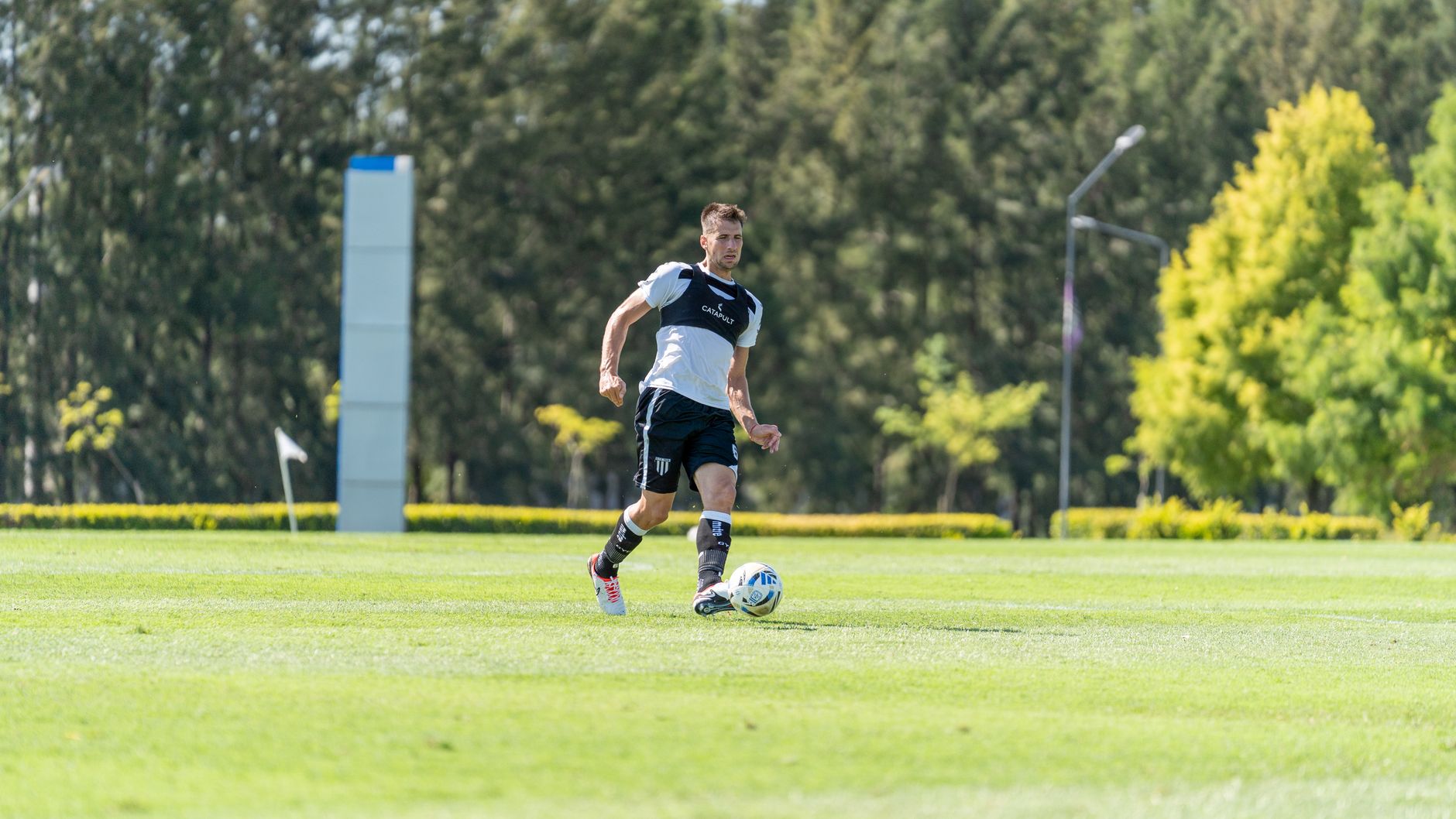
Photo by Franco Monsalvo on Pexels
The Bottom Line
The best football fitness training tips are simple to state but difficult to apply: train the energy systems your position demands, make high-speed work progressive, strengthen the muscles that absorb force, and protect recovery as seriously as training itself. Why does this matter? Because a player who can run 10 kilometres but cannot repeat a 20-metre sprint in the 85th minute may be less effective than a player with slightly lower total distance but superior acceleration, balance, and technical sharpness.
Listen up — this is the part that matters: football conditioning is an expected-value problem. Every session should offer enough stimulus to improve performance while keeping injury risk acceptably low. If a hard workout gives you a 3% fitness benefit but leaves your hamstring unavailable for ten days, the expected return is negative. Conversely, a moderate interval session completed consistently for six weeks can improve match readiness far more reliably than occasional heroic workouts.
Use these operating principles:
- Prioritize repeated high-intensity efforts over endless steady jogging.
- Build weekly workload gradually, especially after holidays or injury.
- Pair sprint training with hamstring, calf, groin, and trunk strength.
- Schedule demanding sessions away from match day.
- Treat sleep, hydration, and fueling as performance inputs.
- Test progress through repeatable drills, not feelings alone.
At Pitch Notes, the same logic used to analyze FIFA World Cup 2026 tactics applies to individual preparation: identify the decisive moments, then train those moments deliberately. A winger needs repeated accelerations and one-versus-one changes of direction; a central midfielder needs aerobic repeatability, scanning under fatigue, and short recovery periods; a goalkeeper needs explosive lateral movement, landing control, and concentration. There is no universal “best” fitness session, only the best match between the session and the player’s role.
Want a clearer performance framework before you build your week?
What Players Actually See
Footballers do not experience a match as one continuous endurance test; they experience a sequence of walking, jogging, cruising, pressing, decelerating, jumping, and sprinting, often with only seconds between actions. Match-analysis data from competitions such as the UEFA Champions League show why traditional distance totals can mislead: two players may cover similar distances while one performs far more high-intensity actions. The difference is usually position, tactical role, team pressing strategy, and the timing of each effort.
The first hidden demand is deceleration. Players often train acceleration but neglect braking, even though stopping places substantial eccentric load on the quadriceps, hamstrings, calves, and adductors. A full-back may sprint 15 metres, brake before an opponent reaches the crossing zone, shuffle sideways, then accelerate again. That sequence is more specific than running five kilometres at a steady pace, and it explains why football fitness training must include controlled stops and direction changes.
The second hidden demand is technical quality under fatigue. A player can complete a conditioning drill successfully while making poor decisions in a small-sided game. Therefore, your plan should move from isolated running to football-specific work:
- Start with linear acceleration and controlled deceleration.
- Add curved runs, lateral movements, and 45-degree cuts.
- Introduce the ball and an opponent or visual cue.
- Finish with passing, finishing, or pressing decisions under fatigue.
- Record both physical output and technical errors.
The third hidden demand is recovery between efforts. Football does not reward the fastest single sprint if the player cannot repeat it six times. A useful field test is to perform six 30-metre efforts with 25 seconds of recovery, recording each time. If the final sprint is more than 5% slower than the first, your repeat-sprint ability requires attention; however, stop the test if technique breaks down or pain appears.
This is where the guide to football match analysis becomes useful: fitness numbers only become meaningful when they are connected to tactical actions. A defensive midfielder who improves recovery speed may close passing lanes earlier, while a winger who improves deceleration may create separation without wasting touches. The performance chain is physical capacity, tactical timing, technical execution, and decision quality.
What should you monitor each week?
- Total training minutes.
- Number of high-intensity running exposures.
- Sprint distance and maximum speed, if measured.
- Session difficulty on a 1-to-10 scale.
- Sleep duration and unusual soreness.
- Technical errors during late-session drills.
The practical insight many players miss is that maximum-speed exposure should not be reserved for match day. A carefully controlled high-speed run every seven to ten days can help prepare tissues for the demands of competition, but the volume should be small and the surface predictable. A sudden jump from no sprinting to repeated full-speed efforts is a common route to hamstring trouble.
What Are the 3 Things That Matter Most?
The three greatest drivers of football fitness are repeatable intensity, force control, and recovery capacity. Repeatable intensity lets you perform actions throughout 90 minutes; force control protects your joints during sprinting and cutting; recovery capacity determines how quickly you can train again. Together, these factors are more valuable than chasing a single impressive running-distance number.
1. Repeatable intensity
Interval training is the most direct way to improve your ability to work, recover, and work again. Beginners can start with 10 repetitions of 30 seconds at approximately 80–85% effort followed by 60 seconds of easy jogging. Intermediate players may use 2 sets of 6 repetitions of 20 seconds hard and 40 seconds easy, with three minutes between sets. Advanced players can combine 15- to 30-metre sprints, curved runs, and ball actions, but the quality of every repetition must remain high.
Do not confuse discomfort with useful intensity. If your posture collapses, your foot placement becomes noisy, or your passing becomes careless, the session may have moved beyond productive conditioning. The aim is to teach your body to reproduce football actions, not to win a suffering contest. According to the Centers for Disease Control and Prevention, adults benefit from regular aerobic and muscle-strengthening activity, but footballers require sport-specific progression layered on top of general health guidance.
2. Force control
Strength training should support acceleration, jumping, landing, and contact. Two sessions per week are sufficient for many amateur players when exercises are performed consistently and placed intelligently around fixtures. A balanced program may include split squats, Romanian deadlifts, calf raises, Copenhagen planks, hamstring bridges, push-ups, rows, and anti-rotation presses. Use two to four sets of six to twelve controlled repetitions for major strength exercises, leaving approximately two repetitions in reserve rather than reaching failure every time.
The Nordic hamstring exercise deserves special attention because hamstring injury is a persistent problem in football. The FIFA 11+ injury-prevention program emphasizes progressive strength, balance, and running preparation rather than random stretching alone. Listen up — this is the part that matters: strength is not just about producing force; it is about absorbing force. A player who can squat heavily but cannot brake safely may still be poorly prepared for football.
3. Recovery capacity
Recovery is not passive laziness; it is the period during which your body converts training stress into improved performance. The National Sleep Foundation commonly identifies seven to nine hours as an adult sleep range, although individual needs vary. Players training twice daily, teenagers in growth phases, and athletes returning from injury may require more sleep and carefully planned nutrition.
Use a simple recovery checklist:
- Sleep: aim for a consistent schedule before chasing supplements.
- Fluids: replace losses after hot sessions and monitor unusually dark urine.
- Carbohydrates: eat them around demanding football work.
- Protein: distribute intake across meals rather than relying on one large serving.
- Mobility: use gentle movement for range of motion, not aggressive stretching on painful tissue.
- Rest: include at least one low-load or complete-rest day each week.
A useful information-gain rule is this: if your resting heart rate is unusually elevated for several mornings, your legs feel heavy during warm-up, and your sprint times decline, reduce intensity before you feel injured. Any single signal can be noise; three signals pointing in the same direction are a probability update worth respecting.
Ready to turn these principles into a position-specific routine?

Photo by Franco Monsalvo on Pexels
How Should You Build a Weekly Football Fitness Plan?
A weekly football fitness plan should place the hardest running and strength sessions far enough from matches to protect speed, technique, and recovery. For a Saturday match, a practical structure is strength and technical work on Monday, interval conditioning on Tuesday, low-intensity recovery on Wednesday, speed and small-sided games on Thursday, a short activation session on Friday, and competition on Saturday. The exact arrangement changes with travel, age, playing time, and the next fixture.
The plan below is a starting template, not a medical prescription:
| Day | Primary emphasis | Example work |
|---|---|---|
| Monday | Recovery and mobility | 20–30 minutes easy cycling, mobility, light ball work |
| Tuesday | Conditioning | 2 sets of 6 hard efforts with controlled recovery |
| Wednesday | Strength | Split squat, hinge, calf, groin, trunk, upper body |
| Thursday | Speed and football specificity | Accelerations, decelerations, small-sided games |
| Friday | Taper | 20–40 minutes, low volume, sharp technical actions |
| Saturday | Match | Warm-up, competition, post-match recovery |
| Sunday | Rest or light movement | Walking, mobility, easy cycling |
Players with limited time can combine strength and conditioning, but the order matters. If sprint quality is the priority, sprint before heavy lifting; if general conditioning is the priority, intervals can follow technical work. Avoid stacking maximal sprinting, exhaustive intervals, and heavy lower-body lifting on consecutive days unless you have coaching oversight and a strong training history.
The biggest planning error is treating every day as a test. A useful week contains high, medium, and low days. In a seven-day period, two genuinely hard sessions may produce more improvement than five medium-hard sessions that leave you permanently fatigued. This resembles bankroll management in risk-based decision-making: preserving capacity for the decisive event usually beats spending everything early. Pitch Notes covers football strategy and match context, but the same principle applies to your preparation: save your highest output for the moments that determine the result.
For a more detailed progression, explore the football speed and agility drills. Begin with two or three weeks at a manageable volume, then increase only one of the following:
- Repetition count.
- Sprint distance.
- Work intensity.
- Movement complexity.
- Reduced recovery time.
Never increase all five in the same week. That approach makes it impossible to identify what caused soreness, performance improvement, or decline.
What Are the Edge Cases and Gotchas?
The most dangerous football fitness mistakes occur when a sensible exercise is applied at the wrong time, volume, surface, or recovery state. Returning from injury, changing boots, moving to artificial turf, entering a hot tournament environment, or suddenly joining a higher-level team can alter tissue stress even when the workout appears familiar. The safe decision is not always the easiest decision, and the cost of ignoring warning signs can be weeks away from football.
Returning after a break
After two to four weeks away, do not resume your previous sprint volume immediately. Start with roughly 60–70% of your former high-intensity workload, preserve technical sharpness, and rebuild full-speed exposure over two or three weeks. A player returning after a longer injury layoff needs medical and coaching guidance because strength symmetry, confidence, and movement strategy may all be affected.
Training in heat
Heat changes perceived effort, sweat loss, and recovery. The World Health Organization recognizes environmental conditions as an important factor in safe physical activity, and football-specific planning should include earlier sessions, additional breaks, and sensible hydration. Do not use dehydration as proof of a better workout; water loss is not equivalent to fitness improvement.
Growth and youth football
Young players need age-appropriate progressions, technical variety, and adequate recovery rather than adult workloads copied onto smaller bodies. Growth-related changes can temporarily affect coordination, flexibility, and perceived effort. Coaches and parents should monitor pain that persists, altered running mechanics, or repeated fatigue instead of praising players for hiding symptoms.
Surface and footwear changes
Moving from natural grass to artificial turf can change traction and loading. New boots should be introduced gradually, ideally during low-risk technical sessions before competitive play. Sudden changes in studs, surface, or training volume create a compound-risk problem: each factor may be tolerable alone, but together they can exceed tissue capacity.
Pain versus normal fatigue
Normal fatigue tends to be symmetrical, improves with gentle movement, and settles over 24–48 hours. Sharp pain, swelling, instability, limping, night pain, or worsening symptoms deserve assessment from a qualified medical professional. A practical stop rule is simple: if pain changes your movement, stop the high-speed component rather than bargaining with it.
This is an important contrarian conclusion: stretching is not a universal injury shield. Mobility work can help a player access useful positions, but the strongest protection usually comes from progressive exposure to sprinting, deceleration, strength, and football-specific demands. The football injury-prevention checklist can help you organize those exposures without turning every warm-up into a marathon.
Can you tell whether your plan is building fitness or merely accumulating fatigue?
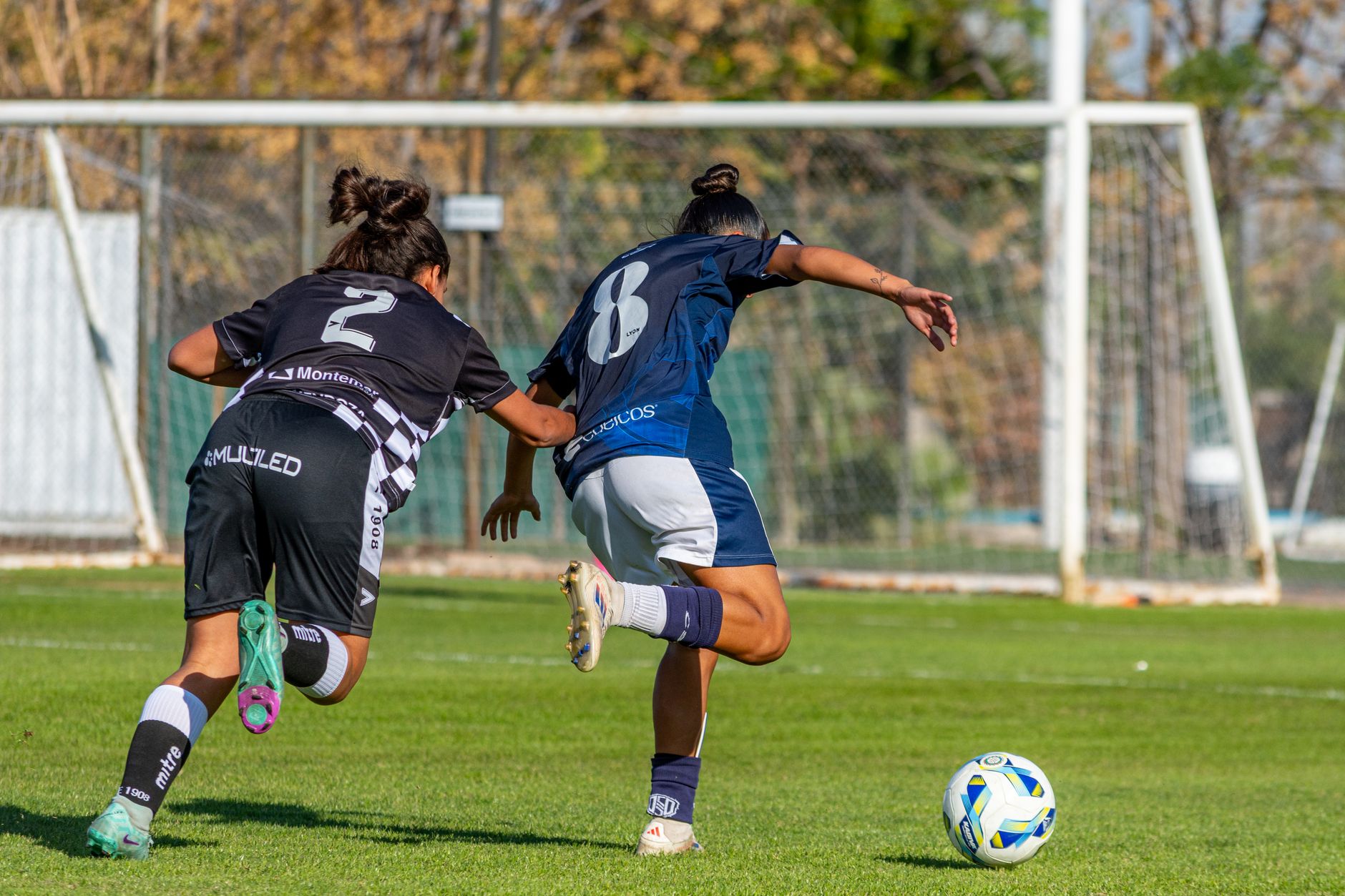
Photo by Franco Monsalvo on Pexels
How Can You Measure Whether Football Fitness Is Improving?
Football fitness is improving when you can repeat high-quality actions with less performance loss, not merely when your workout feels harder. Test the same drill under similar conditions every three to four weeks, recording sprint times, recovery intervals, technical success, and perceived effort. The most useful testing combination includes a short acceleration test, a repeat-sprint test, an aerobic field test, and a football-specific small-sided game.
Keep your data modest and repeatable:
- Record a 10- or 20-metre sprint from a standing start.
- Complete six 30-metre sprints with fixed recovery.
- Note the slowest sprint and calculate the percentage drop from your fastest.
- Track successful passes, lost possessions, or shots during a fatigued drill.
- Compare results only when sleep, weather, surface, and warm-up are reasonably similar.
A simple sprint-decrement calculation is:
(total sprint time ÷ ideal sprint time − 1) × 100.
For example, if six sprint times total 28.8 seconds and the fastest time multiplied by six equals 27.6 seconds, the decrement is approximately 4.35%. The number is not a universal pass mark, but it gives you a consistent trend. If the percentage worsens while training volume rises, the answer may be recovery rather than more conditioning.
Heart-rate monitors, GPS devices, and running apps can provide useful context, but they are not automatically accurate. Device placement, sampling rate, satellite signal, and algorithm differences affect results. A 5% change in recorded distance may reflect technology rather than fitness, so combine technology with observable performance: can you press, turn, pass, and sprint late in the session?
According to the FIFA Training Centre, effective development connects physical, technical, tactical, and psychological elements. In practical terms, test in situations that resemble football. A midfielder’s success may be better represented by repeated scanning and passing after a hard run than by a laboratory-style endurance score alone.
The Verdict
The most reliable football fitness training plan is progressive, specific, measurable, and recoverable. Build your base with aerobic work, develop repeated sprint ability through intervals, strengthen the hamstrings and adductors, rehearse deceleration, and connect conditioning to passing, pressing, turning, and finishing. Then use workload notes and simple repeatable tests to decide whether to progress, hold, or reduce training.
What nobody tells you is that discipline often looks boring: the same warm-up, the same strength fundamentals, the same sleep routine, and small weekly increases. Yet that consistency has the highest expected value because it compounds without demanding a reckless gamble with your availability. If you and I are plotting a stronger season together, start with two quality conditioning exposures, two strength sessions, one full rest day, and a clear rule for stopping when pain changes movement.
Want to keep building a smarter football preparation routine?
Frequently Asked Questions
Q: What are football fitness training tips?
A: Football fitness training tips are practical methods for improving endurance, sprint repetition, strength, agility, recovery, and technical quality under fatigue. Effective preparation usually combines two conditioning sessions, two strength sessions, football-specific movement, and at least one low-load or complete-rest day each week. The correct volume depends on age, position, match schedule, training history, and injury status. Progress gradually rather than copying a professional club’s workload, and measure improvement through repeatable sprint, recovery, and technical tests.
Q: How can I improve football stamina quickly?
A: Improve football stamina by combining controlled intervals with small-sided games and consistent aerobic work over several weeks. Start with 10 repetitions of 30 seconds at approximately 80–85% effort followed by 60 seconds of easy jogging, then adjust volume only when technique remains stable. Add one football-specific session involving pressing, recovery runs, and passing under fatigue. Rapidly increasing intensity can increase injury risk, so allow at least 24 hours between demanding lower-body sessions.
Q: What is the difference between football stamina and running endurance?
A: Football stamina is the ability to repeat varied actions, including sprinting, stopping, turning, jogging, and technical decisions, whereas running endurance usually describes sustained linear effort. A player may run continuously for 60 minutes yet struggle with repeated 20-metre accelerations and sharp decelerations. Football training should therefore include intervals, changes of direction, ball work, and decision-making rather than relying only on long-distance runs.
Q: How often should football players do strength training?
A: Most amateur football players can benefit from two strength sessions per week, provided the sessions fit around matches and intense running. Prioritize split squats, Romanian deadlifts, calf raises, hamstring work, Copenhagen planks, rows, and trunk exercises using controlled technique. Leave roughly two repetitions in reserve for most sets and reduce lower-body volume near competition. Players returning from injury or training at elite volume should follow individualized guidance from a qualified coach or clinician.
Q: Why does my football fitness training make me slower?
A: Football fitness training can make you slower when workload, recovery, or session placement prevents your nervous system and muscles from recovering. Warning signs include declining sprint times, heavy legs during warm-up, poor coordination, elevated perceived effort, and technical mistakes. Reduce volume for several days, protect sleep and nutrition, and avoid stacking maximal sprints, exhaustive intervals, and heavy leg lifting. If symptoms persist or pain alters movement, seek assessment from a sports-medicine professional.
Q: How much recovery do I need between football training sessions?
A: Most players need approximately 24–48 hours between demanding lower-body sessions, with longer recovery after matches or unusually high workloads. Light mobility, walking, easy cycling, and technical work can often be performed during recovery, but they should not become hidden high-intensity sessions. Sleep for roughly seven to nine hours when possible, eat sufficient carbohydrate and protein, and monitor soreness, sprint quality, and mood before repeating hard work.
Q: Are football fitness drills worth doing without a coach?
A: Football fitness drills can be effective without a coach when the exercises are simple, measurable, and performed with conservative progression. Use cones, a stopwatch, a wall, and a written workload log to control distance, repetitions, recovery, and technical success. However, high-speed cutting, return-to-play training, and persistent pain are safer with professional supervision. Stop immediately if technique deteriorates or discomfort changes your running pattern.
Thank you for reading.
Pitch Notes · Latest Insights