
What Nobody Tells You About Football Formations
The best football formation is not universally 4-3-3 or 4-2-3-1; it is the structure that matches a team’s players, pressing ability, defensive spacing and game state. In association football, coaches...
What Nobody Tells You About Football Formations
The best football formation is not universally 4-3-3 or 4-2-3-1; it is the structure that matches a team’s players, pressing ability, defensive spacing and game state. In association football, coaches such as Pep Guardiola, Jürgen Klopp and Carlo Ancelotti routinely alter the listed formation during matches, while FIFA World Cup 2026 teams will continue using flexible shapes rather than fixed diagrams. In American football, the term means a pre-snap alignment governed by rules such as seven offensive players on the line of scrimmage, with systems including the I-formation, shotgun and spread offense. The most reliable starting point for soccer is usually 4-3-3 or 4-2-3-1, while 4-4-2 remains valuable for compact defending and direct attacks. Identify your team’s strongest zone first, then select the formation that creates the highest expected-value chances without exposing an obvious defensive weakness.
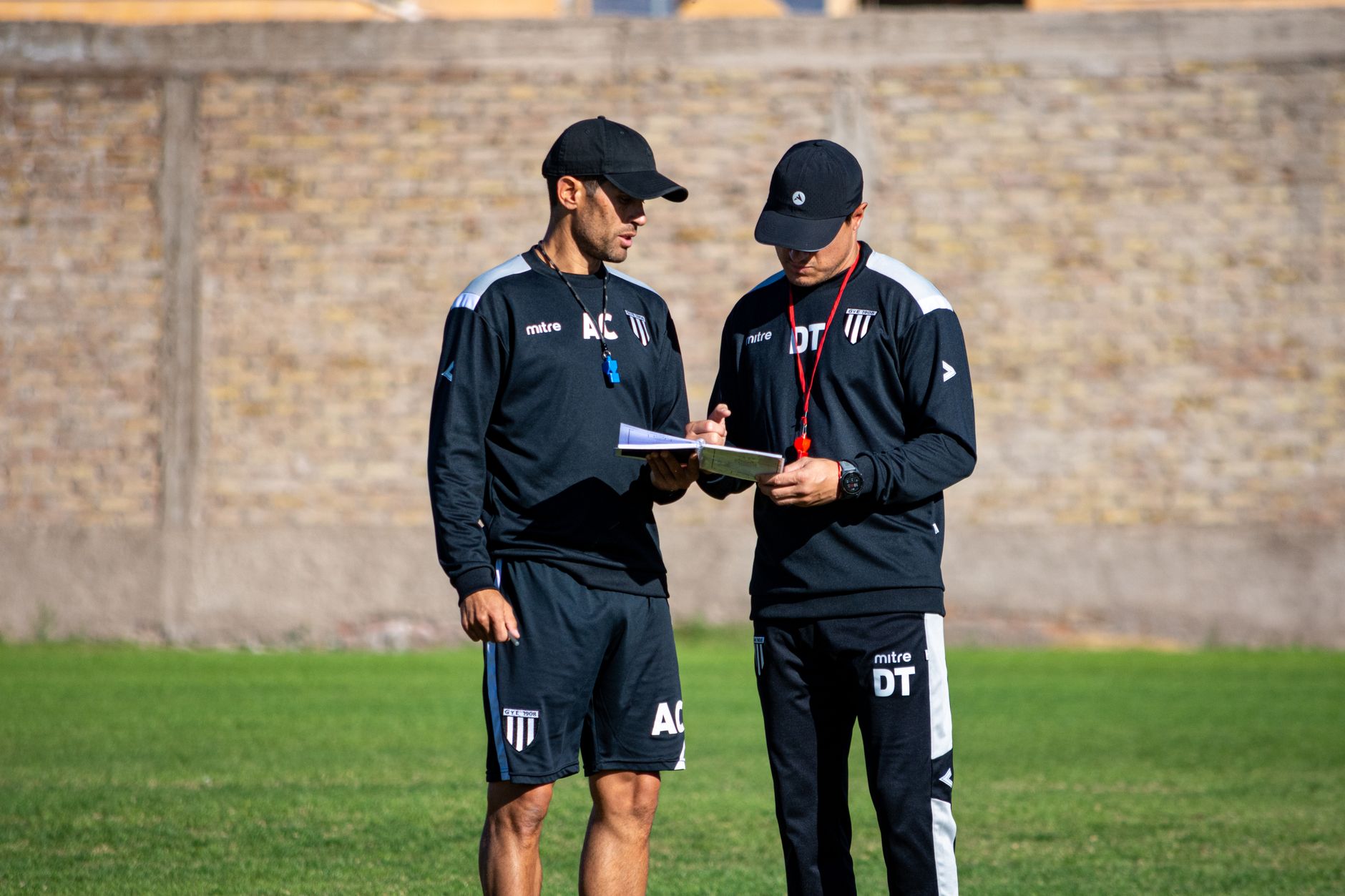
Photo by Franco Monsalvo on Pexels
The painful truth is that formation diagrams can make football look simpler than it feels on the pitch. A 4-3-3 may become a 3-2-5 in possession, a 4-2-3-1 without the ball, and a 4-4-2 during a pressing trigger; the numbers describe starting positions, not permanent parking spaces. Listen up — this is the part that matters: if you judge a team only by the first lineup graphic, you may misunderstand its actual attacking lanes, defensive cover and player responsibilities. Pitch Notes approaches formations through tactics, match predictions, team trends and player statistics, but responsible analysis still requires uncertainty management. One attractive shape does not guarantee a win, because injuries, opponent quality, fatigue, substitutions and set pieces can change the expected outcome. If you are comparing World Cup 2026 teams, treat a formation as a probability framework rather than a prediction by itself.
Want a clearer tactical starting point before comparing systems?
The Bottom Line
The best football formations are 4-3-3 for width and aggressive pressing, 4-2-3-1 for balance and central protection, 4-4-2 for simplicity and compactness, and 3-5-2 for creating numerical superiority in midfield. However, each formation has a predictable price: 4-3-3 can leave space behind advanced full-backs, 4-2-3-1 may isolate the striker, 4-4-2 can surrender midfield control, and 3-5-2 depends heavily on energetic wing-backs. The winning choice is therefore a team-specific calculation involving player profiles, opponent behaviour and match context. According to the International Football Association Board Laws of the Game, a soccer team fields 11 players, but those 11 players can occupy several different shapes during one phase of play. The apparent formation and the functional formation are not always the same.
The main soccer formations at a glance
| Formation | Main advantage | Common weakness | Best suited to |
|---|---|---|---|
| 4-3-3 | Width, pressing, winger isolation | Space beside midfield pivot | Teams with fast wingers |
| 4-2-3-1 | Two holding midfielders, flexible attack | Lone striker can become isolated | Balanced possession teams |
| 4-4-2 | Compact lines, clear roles | Two central midfielders may be outnumbered | Direct or counterattacking teams |
| 3-5-2 | Midfield overload, two strikers | Vulnerable wide transitions | Teams with strong wing-backs |
| 4-1-4-1 | Defensive stability and central control | Limited support for striker | Teams protecting a lead |
| 4-4-1-1 | Useful link between midfield and attack | Can lack width | Counterattacking systems |
A useful practical rule is to count not only players but also passing options. If the ball carrier has three safe angles instead of one, the formation is functioning; if a full-back receives under pressure with no nearby midfielder, the diagram has failed regardless of its reputation. That is why match analysts often track rest defence, occupation of the five attacking lanes, counterpressing distance and the number of defenders behind the ball. A team can create a numerical advantage in one zone while deliberately leaving another zone weaker. To understand those trade-offs, readers can explore our guide to football team tactics and match analysis. Remember, however, that tactical superiority increases probability; it does not eliminate variance.
What Players Actually See
Players do not see “4-3-3” floating above their heads. They see distances, cues, opponents’ shoulders, passing lanes and the next cover position. A centre-back may see the striker dropping between the lines, a winger may see an isolated full-back, and a holding midfielder may see the danger of a turnover before the pass is played. In possession, a 4-3-3 often asks the full-backs to provide width or invert into midfield, the number eight to attack the half-space, and the winger to decide whether to hold the touchline or move inside. Out of possession, the same team may press in a 4-4-2, with one winger joining the striker and the opposite winger narrowing toward midfield. This is why two clubs using 4-3-3 can look completely different: Manchester City, Liverpool and FC Barcelona have used similar labels while demanding different distances, tempo and pressing rules.
Consider 4-2-3-1. Its two defensive midfielders can protect the centre-backs and give the full-backs permission to advance, while the number 10 connects midfield with the striker. Yet the shape becomes fragile if the double pivot stays flat and the number 10 fails to screen the opponent’s deepest midfielder. The striker may then receive only hopeful passes, and the team’s possession becomes decorative rather than dangerous. A 4-2-3-1 also requires the wide players to retreat quickly, because the space beside each holding midfielder is a common target for diagonal runs. In expected-value terms, the structure is attractive when the team can protect central zones and generate high-quality cutbacks; it becomes less attractive when its wingers cannot defend or its striker cannot retain long passes.
football positions explained for beginners
The 4-4-2 creates a different visual story. Two banks of four can reduce the opponent’s central access, while two forwards provide an immediate counterattacking target. Leicester City’s title-winning 2015–16 side demonstrated how compactness, running power and transition quality could outperform more fashionable possession structures. The risk appears when the opponent uses a midfield three: one of the two central midfielders must jump forward, opening a gap, or the team accepts numerical inferiority. Therefore, 4-4-2 is not automatically defensive, and 4-3-3 is not automatically attacking. The decisive variable is how aggressively the lines move together.
Which system should a coach test first? Start with the players rather than the trend, and compare the likely benefits against the most probable failure mode.
- If the team owns two elite wide forwards and a mobile midfield three, test 4-3-3.
- If the squad has a reliable number 10 and two disciplined holding midfielders, test 4-2-3-1.
- If the team has two complementary strikers and hard-working midfielders, test 4-4-2.
- If the wing-backs can repeat high-intensity runs and three centre-backs defend space well, test 3-5-2.
- If protecting a narrow lead matters more than creating volume, consider 4-1-4-1.
Get started with more practical formation comparisons here.
What Are the 3 Things That Matter Most?
Three factors matter most when judging a football formation: numerical superiority, defensive protection and player suitability. Numerical superiority asks where a team can create an extra player, such as a 3v2 build-up against two forwards or a 4v3 midfield overload. Defensive protection asks what happens immediately after possession is lost, including which players remain behind the ball and whether the first counterpress can delay the opponent. Player suitability asks whether the individuals can actually perform the required tasks at the necessary speed, because a brilliant diagram cannot make a slow full-back defend open space like Alphonso Davies.
1. Numerical advantages
A formation earns its tactical value by producing useful numbers in useful zones. A back three can create a 3v2 against two pressers, but that advantage disappears if the outside centre-backs cannot carry the ball forward. A midfield three can dominate central possession, but not if the opponent’s wingers pin the full-backs and force awkward passes. The important question is not “How many players are here?” but “Can the extra player receive, turn and advance?” Analysts at UEFA regularly describe positional play through space, support and overloads rather than through static formation names; the UEFA Training Ground provides accessible examples of these coaching principles.
A less obvious insight is that numerical superiority can be wasted by poor spacing. Suppose a team has a 4v3 advantage in midfield, but all four players stand within 12 metres of one another. The opponent may still defend the zone with one compact block and then counter through the exposed flank. Conversely, a 3v3 situation may become favourable if one attacker pins a defender and another receives between lines. In our partnership mindset, the calculation is simple: count the extra player, then check whether the spacing converts that extra player into a forward action. If it does not, the numerical edge is theoretical rather than practical.
2. Defensive protection
Every attacking structure needs a plan for the moment the ball is lost. The strongest possession teams often leave three or four players behind the ball, using a centre-back pair plus a holding midfielder or an inverted full-back. This rest-defence structure limits the opponent’s first pass and reduces the distance required to stop a counterattack. A 3-2-5 can therefore be safer than a careless 4-3-3, because the attacking formation may preserve better central cover. The label does not determine safety; the location and orientation of the remaining defenders do.
The practical test is to watch the first five seconds after a turnover. Does the nearest player delay the ball carrier? Do the next two defenders protect the centre before chasing wide? Is the goalkeeper positioned high enough to sweep behind the back line? These details often explain why a team concedes despite having possession above 60 percent. A useful information-gain point for match previews is to compare a club’s high turnovers with the number of shots conceded within 10 seconds of losing the ball. That relationship can reveal transition vulnerability more accurately than possession percentage alone. Pitch Notes can use this lens when assessing World Cup 2026 matchups, but no metric should be treated as a guaranteed betting signal.

Photo by https://kaboompics.com/ on Pexels
3. Player suitability
Formation selection becomes much easier when player tasks are written in verbs. The full-back must overlap, invert, delay or recover; the winger must isolate, combine or track; the striker must pin, drop, press or run behind. If a player cannot perform the key verbs reliably, the system’s expected value falls. This is why a coach may prefer a familiar 4-4-2 over a fashionable 3-4-3: fewer instructions can produce better execution under pressure. The decision should also account for fatigue, age, injury history and the opponent’s ability to target specific players.
Listen up — this is the part that matters: flexibility is valuable only when the squad can switch shape without losing communication. During a match, a team may move from 4-2-3-1 to 4-4-2 after a substitution, but the change creates risk if nobody knows who covers the half-space. Coaches should rehearse at least three moments: possession, settled defence and transition. The formation that looks best on a whiteboard may have the lowest real-world value if players require too much time to recognise the next phase.
Edge Cases & Gotchas
Why do formation numbers change during a match?
Formation numbers change because teams attack, defend and transition under different spatial conditions. A listed 4-3-3 may become a 2-3-5 in sustained possession when both full-backs move high, then revert to a 4-1-4-1 when the opponent builds from the back. Therefore, a single label should be treated as the team’s initial reference point rather than a complete tactical description. This distinction is especially important when comparing live match data, where a team’s average positions can resemble a different formation from its coach’s original plan.
The first edge case is asymmetry. One full-back may overlap while the other stays deep, creating a lopsided structure that protects against counters. The second is the false nine, where a striker drops into midfield and pulls a centre-back forward, opening space for an inside forward. The third is the inverted winger, who moves inside onto a stronger foot and asks the full-back to provide width. Lionel Messi’s Barcelona role under Guardiola made the false-nine concept famous, although the underlying principle is broader: move a defender away from the zone the next attacker wants to occupy.
What is the difference between soccer and American football formations?
Soccer formations describe how 11 players arrange themselves across a continuously changing pitch, while American football formations describe pre-snap offensive or defensive alignment before a discrete play. In soccer, 4-3-3 and 3-5-2 are common labels; in American football, I-formation, shotgun, pistol, spread and 4–3 defense describe different personnel and alignment concepts. The two sports share terminology but not the same tactical assumptions.
American football also has specific alignment rules. The National Football League’s official football operations material explains offensive positions and common formations, while the historical T-formation placed the quarterback directly behind the centre and arranged three backs behind him. The I-formation places the fullback and tailback in a line behind the quarterback, supporting downhill runs and play-action passes. The shotgun moves the quarterback several yards behind the centre, increasing passing visibility but potentially lengthening the handoff exchange. If a reader searches “best football formations explained” while meaning NFL football, this distinction prevents a major category error.
Common formation mistakes
The most common mistake is selecting a formation because it is fashionable rather than because it fits the squad. Another is judging success through possession alone: a team can keep the ball and still create low-probability shots from distance. A third is ignoring set pieces, where the nominal formation matters less than blockers, zonal assignments, second-ball positions and goalkeeper protection. Coaches should also avoid changing shape after every poor result, because a small sample of two or three matches cannot reliably separate structural weakness from finishing variance.
A particularly dangerous mistake is assuming that a back three automatically provides defensive security. If the wing-backs are caught high and the outside centre-backs are pulled toward the touchline, the central defender may face a two-on-one against a striker and attacking midfielder. Similarly, a 4-3-3 can be vulnerable when the pivot is dragged away from the centre and the wingers fail to recover. The correct diagnostic is not “Which formation conceded?” but “Which zone was unprotected, which decision created the exposure, and how often is that sequence likely to repeat?”
Review the tactical details before drawing conclusions from a single match.
Do formations matter for match predictions?
Formations matter for match predictions because they influence chance creation, pressing resistance, transition exposure and player matchups, but they are not sufficient on their own. A 4-3-3 may have an advantage against a narrow 4-4-2 if its wingers isolate full-backs, yet the same 4-3-3 may struggle against a disciplined low block. Prediction quality improves when formation analysis is combined with injuries, recent shot quality, home advantage, rest days, weather and confirmed lineups.
For readers using Pitch Notes to follow FIFA World Cup 2026, a sensible process is to assign probabilities instead of certainty. Estimate how likely each team is to control territory, create clear chances and prevent dangerous transitions; then adjust for missing players and tactical changes. Avoid turning a formation preference into a wager without checking market price, local legality and affordability. Gambling carries financial risk, and no tactical edge removes that risk. “The Laws of the Game” are stable rules, but team performance remains variable; disciplined analysis means accepting that a good process can still produce a losing result.
Verdict
The best football formation is the one that creates repeatable advantages while keeping the team’s most dangerous weakness manageable. Choose 4-3-3 for width and pressure, 4-2-3-1 for balanced control, 4-4-2 for compact transitions, or 3-5-2 for midfield overloads and two-striker combinations. Then test the shape against three questions: can the team progress the ball, can it defend the first counterattack, and can its players execute the roles under fatigue? That checklist is more valuable than copying Manchester City, Liverpool, Real Madrid or any other elite club.
The contrarian conclusion is that the “best” formation often changes after the first tactical problem appears. A team may begin in 4-3-3, discover that the opponent blocks its pivot, and switch to a back three to create a free player in build-up. Another may start 3-5-2, lose control of the wings and return to 4-4-2. The winning coach is not the one with the prettiest diagram; it is the one who identifies the highest-value adjustment before the opponent does. Keep that probability mindset, partner: formations open doors, but decisions determine whether anyone walks through them.
Want to keep tracking tactics, lineups and World Cup 2026 developments?
Frequently Asked Questions
Q: What is a football formation?
A: A football formation is the planned positioning of players before and during a phase of play. In soccer, labels such as 4-3-3 identify defenders, midfielders and forwards, while in American football terms such as shotgun and I-formation describe pre-snap alignment. The numbers are starting references, not permanent locations, because players move during possession, pressing and transitions. Always confirm whether “football” means soccer or American football before applying tactical advice.
Q: What is the best football formation for beginners?
A: The 4-4-2 is usually the easiest football formation for beginners to understand and organise. It creates two clear defensive lines, uses two central midfielders and gives the team two forward targets during attacks. However, 4-3-3 may teach width and pressing more effectively for advanced youth teams, while 4-2-3-1 is useful when coaches want to introduce a dedicated number 10. Choose the system that matches players’ communication and fitness levels.
Q: What is the difference between 4-3-3 and 4-2-3-1?
A: The main difference is midfield structure: 4-3-3 uses a single pivot with two number eights, while 4-2-3-1 uses two holding midfielders behind a number 10. A 4-3-3 often offers stronger width and more aggressive pressing, but the lone pivot can be exposed. A 4-2-3-1 usually protects central areas better, although the striker may receive less support if the number 10 and wingers remain too deep.
Q: How do you choose a football formation?
A: Choose a football formation by matching player strengths to the spaces and responsibilities the system demands. First, identify your best defenders, midfield controller, wide players and strikers; second, assess whether the team can defend transitions; third, test the shape against likely opponents. Coaches should review possession, chance quality, field position and shots conceded after turnovers instead of relying on wins and losses from a small sample.
Q: Why does a football formation fail during a match?
A: A football formation usually fails because player spacing, communication or transition protection breaks down rather than because the diagram is inherently wrong. Common causes include an isolated striker, an exposed pivot, full-backs advancing simultaneously or wingers failing to recover. Review the exact sequence that created danger, then adjust one responsibility at a time. Changing from 4-3-3 to 4-4-2 may help, but only if the new roles solve the original problem.
Q: Do football formations affect betting predictions?
A: Football formations can affect betting predictions by changing expected attacking volume, defensive exposure and player matchups, but they cannot guarantee a result. Compare the formation with confirmed lineups, injuries, rest, home advantage, recent expected goals and the available market price. Use legal, regulated services where applicable, set a fixed entertainment budget and never chase losses. Pitch Notes can support informed football analysis, but every prediction remains uncertain.
Q: What is the best American football formation?
A: The best American football formation depends on the play design, personnel and defensive alignment rather than one universal system. Shotgun is valuable for passing visibility and option concepts, the I-formation supports downhill running and play-action, and spread formations create space for receivers. Coaches must also respect NFL alignment rules, including the requirement that seven offensive players be on the line of scrimmage. Select the formation that makes the intended play credible while limiting predictable tendencies.
Thank you for reading.
Pitch Notes · Latest Insights