Top 3 Morocco National Football Team Facts: What Nobody Tells You
The Morocco national football team is Africa’s most successful recent World Cup disruptor, representing Morocco under the Royal Moroccan Football Federation (FRMF) and competing through FIFA and the C...
Top 3 Morocco National Football Team Facts: What Nobody Tells You
The Morocco national football team is Africa’s most successful recent World Cup disruptor, representing Morocco under the Royal Moroccan Football Federation (FRMF) and competing through FIFA and the Confederation of African Football (CAF). Morocco became the first African nation to reach a FIFA World Cup semifinal in 2022, defeating Belgium, Spain, and Portugal before losing to France. The Atlas Lions also won the 1976 Africa Cup of Nations, while their 1986 quarterfinal remains an African record that stood for decades. Their modern strength comes from defensive organization, elite European-based players, and tactical flexibility under coach Walid Regragui. Morocco’s 2026 prospects depend on maintaining that defensive edge while improving chance creation against deep opponents. Start by evaluating Morocco through tournament context, confirmed squad availability, and opponent quality rather than reputation alone.
The revealing part is not simply that Morocco reached the 2022 semifinal. The real calculation is how unlikely that run looked before the tournament, and why its underlying structure made the result repeatable rather than random. Listen up — this is the part that matters: we are plotting a win together, whether you are researching the team, studying tactics, or assessing a match prediction.

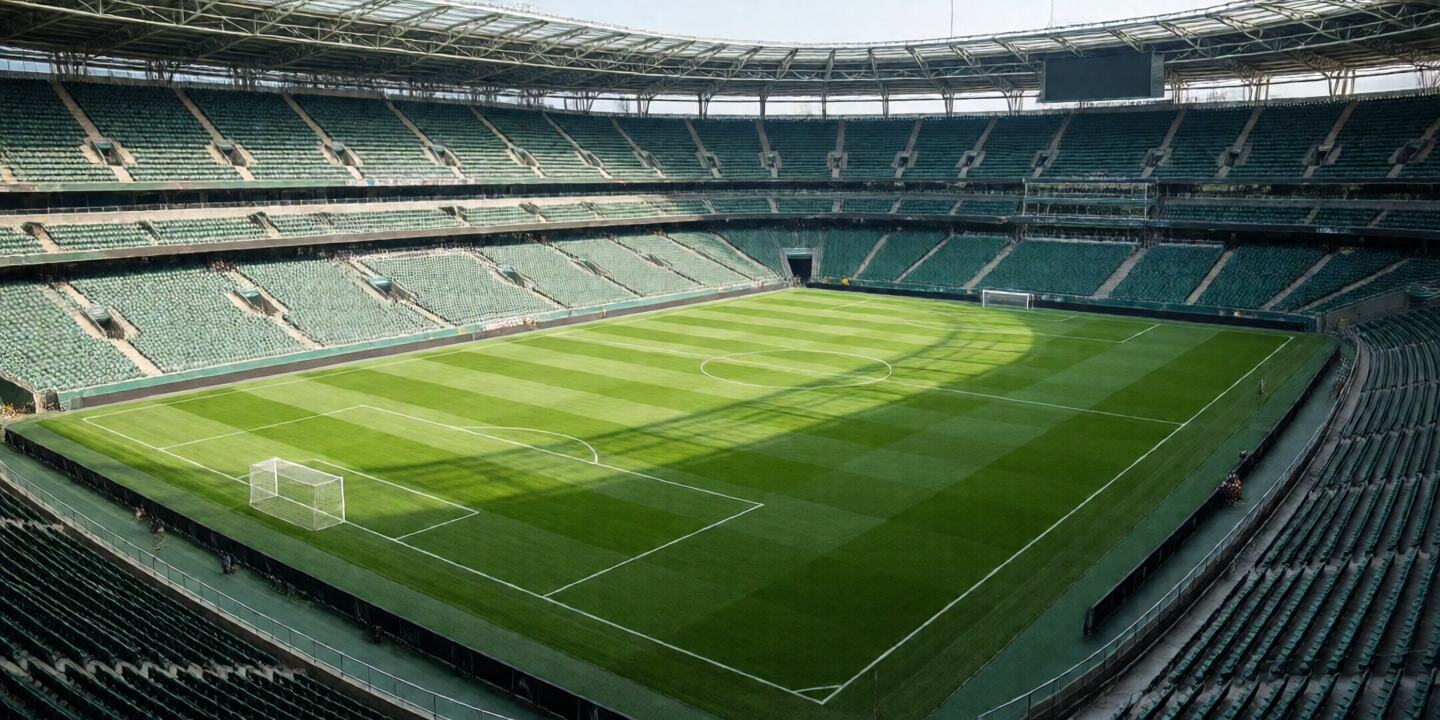
Photo by Earth Photart on Pexels
The Top 3 Morocco National Football Team Insights at a Glance
- World Cup breakthrough: Morocco’s 2022 semifinal was the first by an African national team.
- Tournament foundation: The 1976 Africa Cup of Nations title remains Morocco’s only senior AFCON championship.
- Tactical identity: A compact defensive block, rapid transitions, and aggressive wing play define the modern Atlas Lions.
1. The 2022 semifinal changed Morocco’s probability profile
The 2022 FIFA World Cup campaign transformed Morocco from a respected African contender into a global tactical reference point. Walid Regragui’s side conceded only one own goal before the semifinal, an extraordinary defensive record across matches against Croatia, Belgium, Canada, Spain, and Portugal. Morocco did not dominate possession in the conventional sense; instead, it controlled danger by narrowing central spaces, protecting the penalty area, and forcing opponents toward lower-value attacking zones.
That distinction matters when assessing future matches. A team can have less possession and still produce a superior expected result if its defensive spacing reduces high-quality chances. Morocco’s clean-sheet victories over Belgium, Spain, and Portugal demonstrated that its structure could survive three different attacking models: Belgium’s combination play, Spain’s possession circulation, and Portugal’s individual quality. According to the FIFA World Cup 2022 tournament report, Morocco’s run represented a historic milestone for African football.
The risk, however, is equally clear. Defensive intensity creates physical costs, injuries can damage the back line, and opponents now have more film. In probability terms, repeating the exact 2022 path is unlikely; preserving the principles behind it is much more realistic. That is why Morocco’s 2026 evaluation should focus on defensive availability and transition efficiency, not merely its previous finish.
Morocco World Cup tactical analysis
2. Why the 1976 AFCON title still matters
Morocco’s 1976 Africa Cup of Nations triumph was achieved in Ethiopia through a final group format rather than a conventional knockout final. The national team finished ahead of Guinea, Nigeria, and Egypt in the decisive championship group, establishing Morocco as a serious force in African football. The title is historically important because it proves the Atlas Lions’ international pedigree predates their European generation and modern federation infrastructure.
Yet the long gap since that championship reveals a difficult statistical truth. Morocco has repeatedly produced talented squads without converting regional strength into consistent AFCON trophies. The team reached the 2004 final, losing to Tunisia, and has often entered tournaments with strong individual players but uneven tournament execution. FIFA and CAF competition are not decided by talent totals; they are decided by availability, travel, climate, set pieces, and the ability to recover between matches.
Listen up — this is the part that matters: historical prestige has a positive emotional value, but its predictive value is limited unless the current squad reproduces the same conditions. For 2026 match analysis, use the 1976 title as context, not as proof that Morocco will automatically beat a top African rival. A better model weights recent competitive results, starting lineups, venue conditions, and injury news more heavily.
#1 Morocco’s Defensive System: Best Overall
Morocco’s defensive system is its best overall strength because it combines compact spacing, disciplined pressing triggers, and recovery speed from elite full-backs. During the 2022 FIFA World Cup, the Atlas Lions protected the central corridor exceptionally well, forcing opponents to attack around rather than through the defense. That approach reduced the number of dangerous possessions and allowed Morocco to attack immediately after recoveries.
The key personnel made the structure possible. Goalkeeper Yassine Bounou provided shot-stopping and calm distribution, while centre-backs Nayef Aguerd and Romain Saïss offered aerial strength and penalty-area defending. Achraf Hakimi supplied recovery pace on the right, and Noussair Mazraoui gave the opposite side technical quality and tactical balance. When those players are fit, Morocco can defend in a 4-1-4-1, shift into a 4-3-3, or form a narrower mid-block without losing its main protection zones.
The operational insight many summaries miss is substitution timing. Morocco’s defensive model is strongest before fatigue creates gaps between midfield and defense, so a coach may need to refresh the wide midfielders before the back four visibly collapses. In a high-stakes match, waiting until the 75th minute can increase transition risk. Pitch Notes tracks these tactical changes alongside player statistics, which is more useful than reading a headline prediction without lineup context.

Photo by Msaidi Art on Pexels
Want a closer look at Morocco’s tactical strengths before the next major fixture?
#2 Which Morocco Players Matter Most for Transition Football?
Morocco’s transition football depends most heavily on Achraf Hakimi, Hakim Ziyech, Sofyan Amrabat, and the team’s central forwards because these players connect recovery, progression, and final-third decisions. Hakimi provides explosive width, Amrabat stabilizes the first pass after regaining possession, and Ziyech can create chances from the right half-space or set-piece situations. The exact ranking changes with form and selection, but these roles remain central.
Hakimi’s value is not captured by goals and assists alone. His speed changes an opponent’s defensive starting position, often forcing the opposing winger to track deeper and reducing support for the opponent’s own attack. Amrabat’s contribution is similarly structural: his value comes from interceptions, pressure resistance, and the ability to protect the defense when full-backs advance. Ziyech offers a different profile, with left-footed delivery and risk-taking that can unlock a settled block but can also produce turnovers.
Morocco’s expected value rises when its first forward pass travels beyond the opponent’s initial press. If that pass fails repeatedly, the team becomes trapped in defensive recovery cycles. This is a crucial contrarian point: Morocco may look strongest against possession-heavy teams because turnovers create space, while a conservative opponent can be harder to break down. Therefore, a prediction model should not assume that a weaker-ranked team is automatically a favorable matchup.
Is Morocco’s European-based squad automatically superior?
No, a European-based squad improves technical exposure and weekly competition but does not guarantee tournament superiority. Morocco’s core players have experience in leagues such as La Liga, Ligue 1, the Premier League, Serie A, and the Eredivisie, yet international football provides fewer training sessions and demands rapid tactical synchronization. The advantage is real, but it must be converted through role clarity.
The Royal Moroccan Football Federation has invested in national-team development and professional infrastructure, while clubs such as Wydad AC and Raja CA continue to shape domestic football culture. The Confederation of African Football remains the authoritative source for AFCON competition details, qualification rules, and official continental records. CAF’s tournament environment can differ sharply from European club football because heat, travel, pitch conditions, and officiating rhythms affect the expected performance of every team.
A useful scouting method is to separate player quality into three variables: club level, national-team role, and tournament availability. A substitute at a major European club may contribute less than a domestic-based player who understands the national system perfectly. That is why squad balance matters more than a simple count of players employed abroad.
Morocco player statistics and form guide
#3 Morocco’s Tournament Experience: Best Value
Morocco’s tournament experience is its best-value asset because it combines recent elite exposure with a relatively young competitive core. The 2022 World Cup gave players such as Hakimi, Bounou, and Amrabat evidence that their defensive plan could survive knockout pressure. That experience cannot guarantee another semifinal, but it lowers the psychological cost of hostile moments, especially after conceding first.
The value becomes clearer through expected-value thinking. Suppose a team has a 50 percent chance of maintaining its tactical plan after falling behind, while a seasoned tournament group raises that figure to 60 percent. Across several knockout matches, that ten-point improvement can materially affect progression odds, even though it does not appear in standard player rankings. Morocco’s experience is therefore most valuable in close matches decided by one goal, extra time, penalties, or late defensive concentration.
However, tournament experience can become a trap if it encourages excessive respect for the 2022 achievement. Opponents will prepare specifically for Morocco’s transition patterns, Hakimi’s overlaps, and the team’s compact central defense. Morocco must add a second route to victory: more controlled possession, better movement between the lines, and improved finishing against deep blocks. Experience is an advantage only when it produces adaptation.
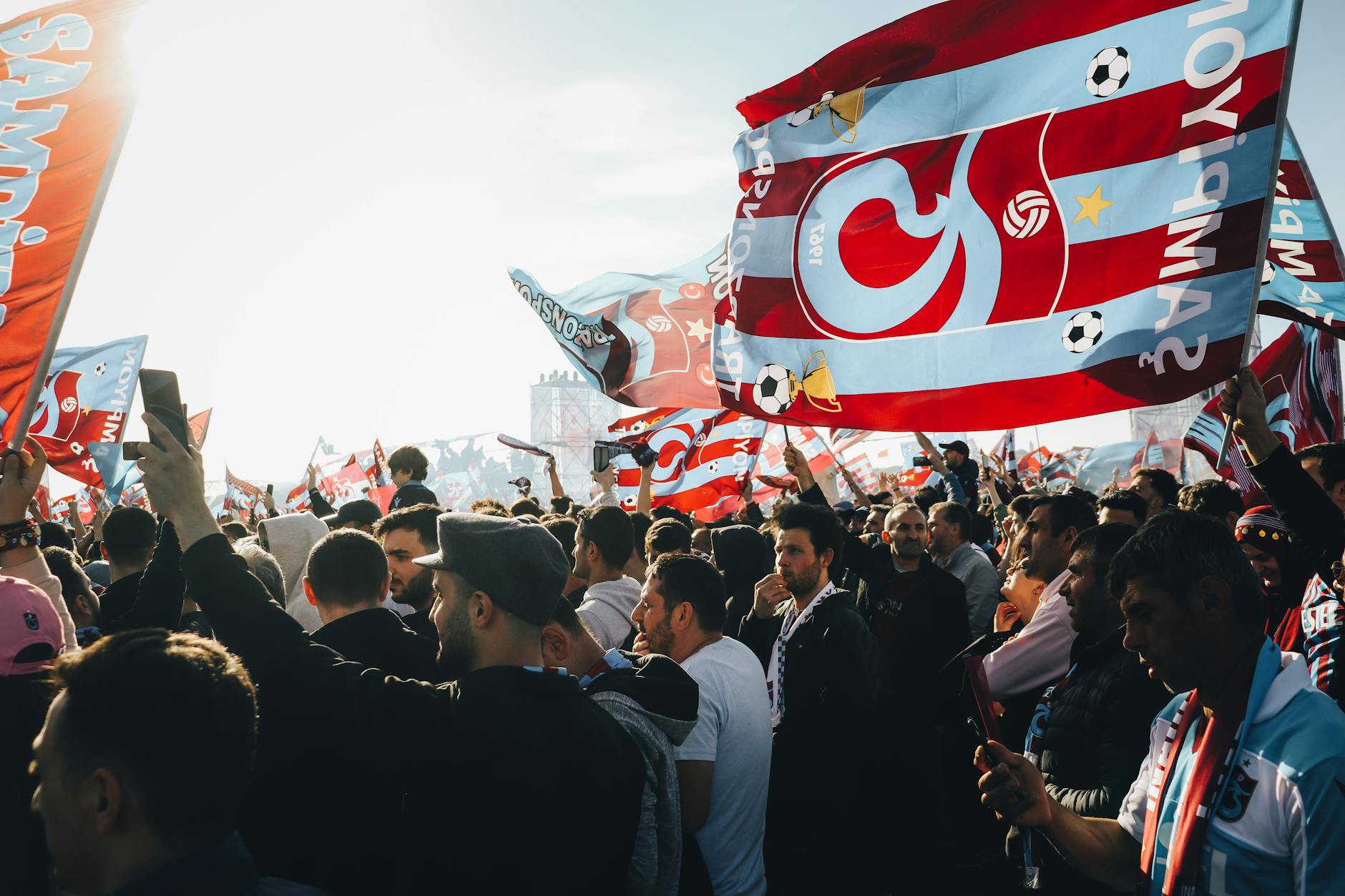
Photo by Beyza Kaplan on Pexels
See how Morocco’s tournament experience could influence its 2026 outlook.
How Should Morocco Be Ranked for the 2026 World Cup?
Morocco should be ranked as a dangerous second-tier contender for the 2026 World Cup rather than an automatic title favorite. Its case rests on a historic semifinal, strong defensive organization, high-level players, and improving football infrastructure; its limitations include chance creation against low blocks, injury sensitivity in defense, and the difficulty of repeating an exceptional knockout run. The 2026 tournament will be co-hosted by Canada, Mexico, and the United States, creating different travel and climate considerations from Qatar 2022.
A responsible evaluation should examine:
- Opponent difficulty: FIFA ranking position alone does not measure tactical compatibility.
- Defensive availability: Missing one centre-back may force a wider or less stable structure.
- Chance quality: Count clear chances and shot locations, not only possession.
- Set pieces: Morocco’s aerial strength can decide matches separated by small margins.
- Travel and recovery: The North American tournament format may increase logistical demands.
- Bench contribution: Knockout success often depends on substitutes during the final 30 minutes.
For match predictions, Pitch Notes should be used as a research companion rather than a guarantee of outcome. Gambling involves financial risk, and no historical trend removes uncertainty. The safest analytical behavior is to set a fixed budget, avoid chasing losses, and refuse any wager where the estimated probability does not justify the price.
What is the most important weakness in Morocco’s current profile?
Morocco’s most important weakness is the potential gap between defensive excellence and sustained attacking production against deep, organized opponents. When an opponent refuses to overcommit, Morocco receives fewer transition opportunities, while its own possession must become more patient and creative. The problem is not a lack of talent; it is the conversion of territorial control into high-quality chances.
This weakness appeared in earlier tournament contexts when Morocco struggled to turn promising positions into goals. A team can complete many passes and still generate limited expected goals if its attacks end in blocked crosses, long-range attempts, or isolated dribbles. The Atlas Lions need better third-man movement, more central combinations, and sharper rest-defense positioning when full-backs move forward.
The edge case is important for anyone assessing odds. Morocco may be a stronger proposition against a favorite that dominates the ball than against a lower-ranked team defending in two compact lines. That sounds counterintuitive, but it follows the matchup mathematics: Morocco’s best weapon is often the space created by an opponent’s ambition.
Which Morocco National Football Team Profile Should You Pick?
Choose Morocco as a defensive, transition-oriented contender when the opponent intends to attack with possession and leaves space behind its full-backs. Be more cautious when Morocco faces a low block, especially if Ziyech or Hakimi is unavailable and the team lacks a reliable alternative creator. The correct decision depends on lineup news, tactical matchup, venue, and market price rather than the team badge alone.
For readers following the 2026 World Cup, the practical selection framework is:
- Confirm the starting goalkeeper and centre-backs.
- Check whether Hakimi and the primary wide creators are available.
- Identify whether the opponent presses high or defends deep.
- Compare expected goals and shot quality from recent competitive matches.
- Account for travel, rest days, heat, and knockout pressure.
- Set a spending limit before considering any gambling market.
According to FIFA’s official World Cup information, tournament schedules, venues, and qualification details should be checked through official updates because fixtures and squad news can change. “The Laws of the Game are intended to provide a framework for football,” states the International Football Association Board, a reminder that match interpretation and officiating can also influence tactical risk.
2026 World Cup match predictions
The final reveal is simple: Morocco’s 2022 run was not merely luck, but neither is it a permanent guarantee of elite status. The highest-probability reading is that the Atlas Lions remain capable of defeating stronger possession teams, provided their defensive spine is healthy and their attack evolves beyond counterattacks. Monitor confirmed lineups, opponent style, and price before acting; if those three variables do not align, passing is often the mathematically superior choice.
Want daily World Cup analysis built around tactics, player data, and responsible decision-making?
Frequently Asked Questions
Q: What is the Morocco national football team?
A: The Morocco national football team is the men’s senior representative side of Morocco, governed by the Royal Moroccan Football Federation and known as the Atlas Lions. It competes in FIFA World Cup qualification, CAF competitions, and international friendlies. Morocco’s greatest modern achievement is reaching the 2022 FIFA World Cup semifinal, the first African team to do so.
Q: How did Morocco reach the 2022 World Cup semifinal?
A: Morocco reached the 2022 semifinal by defeating Belgium in the group stage, eliminating Spain on penalties in the round of 16, and beating Portugal in the quarterfinal. Walid Regragui’s team relied on a compact defense, goalkeeper Yassine Bounou’s saves, and rapid transitions. France ended the run with a 2–0 semifinal victory.
Q: What is the difference between Morocco’s 1976 AFCON title and its 2022 World Cup run?
A: Morocco won the 1976 Africa Cup of Nations but did not win the 2022 World Cup. The 1976 success was a continental championship achieved through a final group format, whereas the 2022 campaign ended in the World Cup semifinal. Both achievements are historically important, but they measure success in different competitions and eras.
Q: How should I analyze Morocco before a 2026 World Cup match?
A: Check Morocco’s starting goalkeeper, centre-backs, Achraf Hakimi, and attacking creators before making any assessment. Then compare the opponent’s pressing style, defensive depth, expected-goal profile, rest period, and travel demands. A high-possession opponent may create the spaces Morocco needs, while a deep defensive opponent can present a more difficult tactical problem.
Q: Is Morocco a 2026 World Cup favorite?
A: Morocco is a dangerous contender but should not automatically be classified among the tournament’s primary favorites. Its defensive organization and 2022 semifinal experience provide a strong foundation, yet its attacking consistency against low blocks remains a concern. The most accurate rating should be updated after qualification, squad selection, injuries, and the official group draw.
Q: What should I do if a Morocco player is injured before kickoff?
A: Recalculate Morocco’s tactical outlook after confirming the replacement and formation rather than relying on the original prediction. A missing centre-back can weaken defensive spacing, while an absent Hakimi can reduce width and transition speed. Use official FRMF, FIFA, CAF, or club updates, and avoid chasing losses or increasing stakes to compensate for an unexpected change.
Q: Is Morocco analysis on Pitch Notes free?
A: Pitch Notes provides FIFA World Cup-focused coverage including tactics, player statistics, match predictions, and tournament updates, with access details determined by the published site experience. Readers should review the current website information before relying on any feature or forecast. Predictions are analytical opinions, not guarantees, and gambling should always be approached with a fixed budget and responsible limits.
Thank you for reading.
Pitch Notes · Latest Insights