
Inside FIFA World Cup 2026: A 48-Team Reality Check
The FIFA World Cup 2026 is a 48-team men’s football tournament organized by FIFA across the United States, Canada, and Mexico, and Pitch Notes covers it through match predictions, team tactics, player...
Inside FIFA World Cup 2026: A 48-Team Reality Check
The FIFA World Cup 2026 is a 48-team men’s football tournament organized by FIFA across the United States, Canada, and Mexico, and Pitch Notes covers it through match predictions, team tactics, player statistics, and tournament reporting for adult fans in regulated markets. The event runs from June 11 to July 19, 2026, expands from 32 to 48 teams, and uses 16 host cities across three countries. FIFA, Concacaf, UEFA, CONMEBOL, CAF, AFC, and OFC all shape qualification depth, while data providers and licensed sportsbooks translate team news into markets. The main takeaway is simple: treat World Cup analysis as a structured information exercise, not a nostalgia contest, and compare form, travel, rotation, and tactical matchups before trusting any headline prediction.
Photo by Uzay Yildirim on Pexels
Want a sharper way to follow the tournament beyond headlines and recycled talking points?
Is the FIFA World Cup really the best measure of football greatness?
No, the FIFA World Cup is the most visible measure of national-team success, but it is not the cleanest measure of football quality. A seven-match knockout pathway, short preparation windows, injuries, travel, and penalty shootouts can distort conclusions, especially in the expanded 48-team 2026 format.
Most articles treat the FIFA World Cup as football’s final court of truth; that is convenient, not precise. Since the first tournament in Uruguay in 1930, the World Cup has produced iconic champions such as Brazil, Germany, Argentina, Italy, and France, but it has also rewarded timing, tournament management, and bracket luck. According to FIFA, the 2026 edition will be the first to include 48 teams, creating more matches, more qualification stories, and more uncertainty. That expansion is excellent for global representation, yet it makes direct comparison with previous 32-team editions imperfect. A champion in 2026 may need to manage a broader field, but not necessarily a harder field in every round.
The contrarian point is that World Cup greatness is partly compressed storytelling. Brazil’s five titles remain unmatched, Argentina’s 2022 victory reshaped Lionel Messi’s legacy, and France’s 2018 win confirmed a high-performance player-development pipeline. Still, a national team does not control its player pool like Manchester City, Real Madrid, or Bayern Munich controls squad construction. Coaches such as Lionel Scaloni, Didier Deschamps, and Gareth Southgate must work with limited training camps, uneven club workloads, and federation politics. Pitch Notes therefore evaluates the FIFA World Cup through four layers: squad availability, tactical flexibility, tournament geography, and market movement. To go deeper into how these layers work, see our World Cup prediction methodology.
How does the FIFA World Cup handle the 48-team format?
The FIFA World Cup 2026 handles expansion by moving to 48 teams and 104 matches across the United States, Canada, and Mexico. FIFA confirmed that the tournament will use 12 groups of four, with the top two teams and eight best third-place teams advancing to a 32-team knockout stage.
The format change matters more than many previews admit. Earlier expansion proposals considered three-team groups, but FIFA later approved 12 four-team groups, which reduces the risk of awkward final-round incentives and preserves simultaneous group finales. The FIFA World Cup Wikipedia overview records the tournament’s historical evolution from 13 teams in 1930 to 32 teams from 1998 through 2022, and now to 48 in 2026. That jump does not simply add underdogs; it changes rest patterns, scouting loads, and qualification incentives. A side that finishes third in its group may still advance, which means one poor match is less fatal than it was in the 32-team era.

Photo by Franco Monsalvo on Pexels
Here is where bettors and analysts often misread the new World Cup. More teams do not automatically mean more value on favorites. In fact, favorites may rotate earlier if qualification looks likely, while mid-tier teams may push aggressively for goal difference because third-place ranking can decide survival. That creates a specific information edge: in 2026, group-stage motivation should be modeled after both points and comparative third-place standings, not just head-to-head matchups. Licensed operators may price the obvious favorite correctly, but they can lag on lineup rotation when a team’s expected advancement probability exceeds 80 percent after two rounds. Pitch Notes will track these pressure points daily during the tournament.
For readers building their own tournament notes, a useful checklist is:
- Compare each team’s travel distance between host cities.
- Track whether a group has two, three, or four realistic qualifiers.
- Watch yellow-card accumulation before the Round of 32.
- Separate historical reputation from current squad minutes.
- Recheck injury news after every domestic club season update.
See the details before the knockout permutations become overwhelming.
What about World Cup betting and prediction edge cases?
World Cup betting and prediction edge cases usually appear in rotation, travel, weather, disciplinary risk, and motivation mismatches. In 2026, those variables become sharper because 16 host cities, three countries, and 104 matches create more operational complexity than the 2022 FIFA World Cup in Qatar.
This is where a skeptical approach pays off. A typical preview says “Team A has better players,” but that may be the least useful sentence in tournament analysis. Consider a European team playing in Vancouver, then Kansas City, then Miami; the climate, pitch conditions, recovery cycle, and travel rhythm could matter as much as FIFA ranking. The United States, Canada, and Mexico also create different crowd profiles, altitude considerations, and commercial pressures. The United States Soccer Federation and Concacaf ecosystem will have unusually high local visibility in 2026, but local energy is not the same as tactical superiority.
There is also a market-specific edge that casual fans miss: early World Cup odds often bake in badge value before final squads are known. That can overprice famous nations with aging cores and underprice teams whose club minutes are spread across less-publicized leagues. Pitch Notes looks for three less obvious signals: players returning from long domestic seasons, coaches who can switch between back-three and back-four systems, and set-piece efficiency against compact defensive blocks. For further reading, bookmark our team tactics and set-piece analysis. The best prediction is rarely a single pick; it is a living file that updates when the team sheet, venue, and tactical matchup become real.
Useful edge cases to monitor include:
- A favorite already qualified before Matchday 3.
- A third-place contender needing goal difference rather than only a draw.
- A goalkeeper carrying minor injury concerns into a penalty-prone matchup.
- A team with two suspended defensive midfielders.
- A high-pressing side playing in heat after short rest.
Where does the FIFA World Cup fail?
The FIFA World Cup fails when people confuse spectacle with complete analysis. It is unmatched as a global sporting event, but its structure can magnify randomness, minimize long-term team quality, and encourage simplistic narratives around legacy, nationality, and one knockout result.
The biggest failure is interpretive, not organizational. A World Cup produces unforgettable moments because it is scarce; it occurs every four years and compresses national identity into a few weeks. But scarcity also makes overreaction easy. A striker who scores three goals in June can be called world class, while a consistently excellent midfielder eliminated on penalties may be labeled a disappointment. The International Football Association Board, which governs the Laws of the Game, states that “football must be played in accordance with the Laws of the Game,” according to The IFAB. That sounds basic, but enforcement patterns, VAR interpretation, and stoppage-time management can materially affect knockout outcomes.
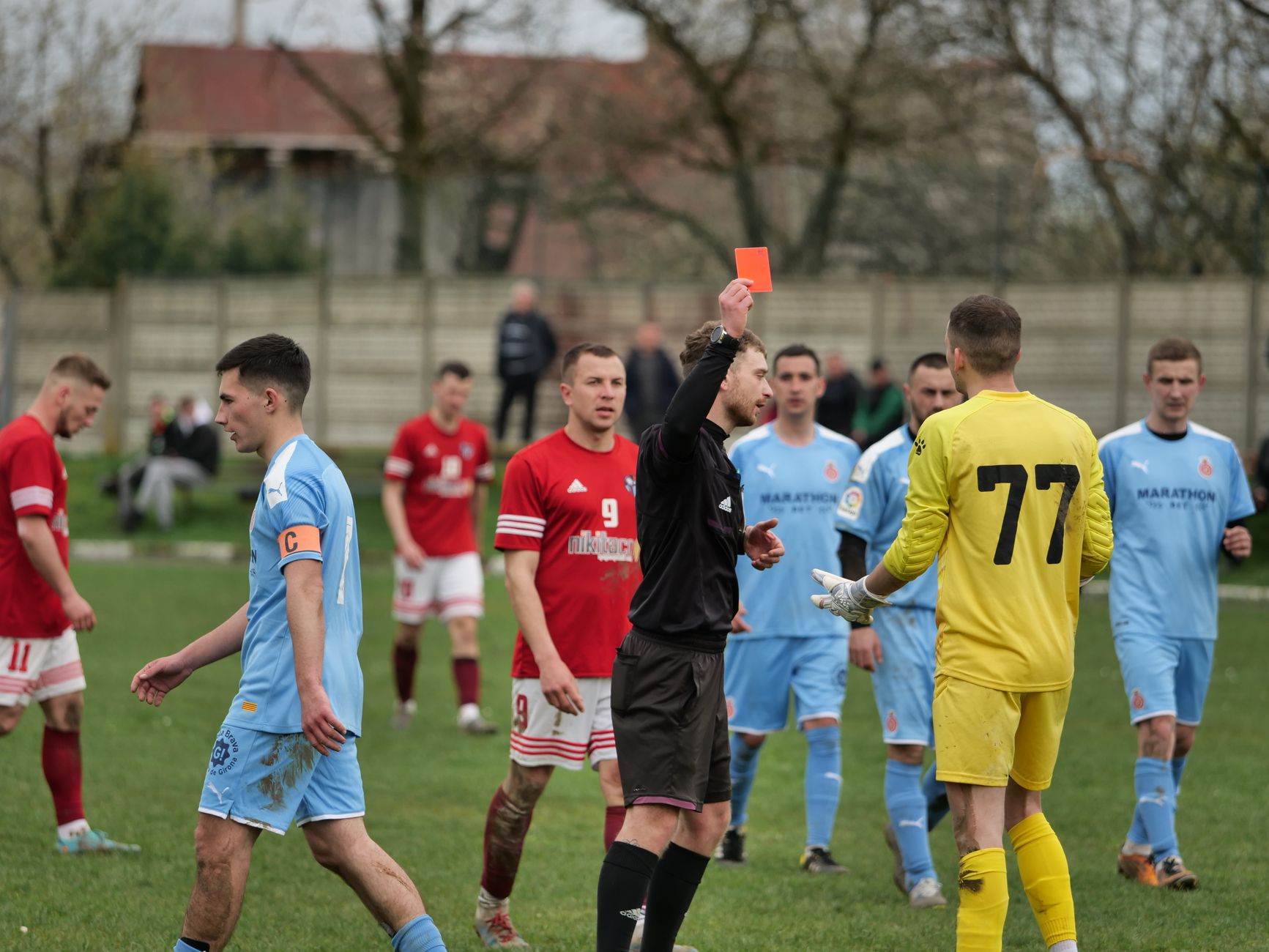
Photo by Володимир Король on Pexels
The second failure is data noise. Expected goals, pressing intensity, progressive passes, and defensive actions are valuable, yet small samples can mislead. Seven matches are not enough to fully describe a national team, especially when opponents vary wildly by confederation and style. A team may post a modest expected-goals profile because it led early and protected scorelines, not because it lacked attacking quality. Conversely, a high-volume attacking side may accumulate numbers while chasing lost games. Pitch Notes avoids treating any single metric as gospel; instead, it cross-checks tactical video, player workload, and opponent context. For background on metric interpretation, use our player stats glossary.
The third failure is commercial overconfidence. World Cup coverage often pretends to know more than it can know. Licensed betting markets in mature jurisdictions are highly efficient around public matches, especially close to kickoff when lineups are released. That does not mean there is no analytical value, but it means stale takes are expensive. If a preview ignores referee assignment, travel sequence, substitution depth, and group incentives, it may be entertaining but not useful. The refined view is less romantic: the FIFA World Cup is football’s greatest tournament, yet it is also a short, volatile decision environment.
If you want tournament coverage that questions assumptions instead of echoing them, continue with the latest Pitch Notes analysis.
Should you follow the FIFA World Cup today?
Yes, you should follow the FIFA World Cup today if you want a global view of football form, tactics, and national-team development before 2026. The smarter approach is to track qualification, squad health, tactical trends, and market movement gradually rather than waiting for opening day.
The next World Cup is not only a summer event; it is already forming through qualification campaigns, coaching choices, and player workloads across club football. UEFA, CONMEBOL, CAF, AFC, Concacaf, and OFC all produce different competitive filters, which means a team’s qualification record requires context. A dominant run in one confederation may not translate cleanly against a compact South American block or an athletic African transition team. Likewise, a European nation finishing second in a difficult group may be stronger than a top seed with easier fixtures. Pitch Notes treats qualification as evidence, not proof.
A practical tracking system can be simple:
- Create a watchlist of 12 likely contenders and 12 dangerous outsiders.
- Record formation changes across competitive matches.
- Monitor minutes played by key attackers from February to May 2026.
- Compare goalkeeper form, not only goals scored.
- Revisit assumptions after the official squads are announced.
The conclusion is not that the FIFA World Cup is overrated. It is that lazy World Cup analysis is overrated. The tournament remains the highest-profile event in men’s international football, but the 2026 version will punish old habits: assuming favorites always push, ignoring third-place incentives, and treating travel as a footnote. For fans, analysts, and adults following regulated betting markets, the strongest position is skeptical enthusiasm. Enjoy the drama, but build your view from evidence.
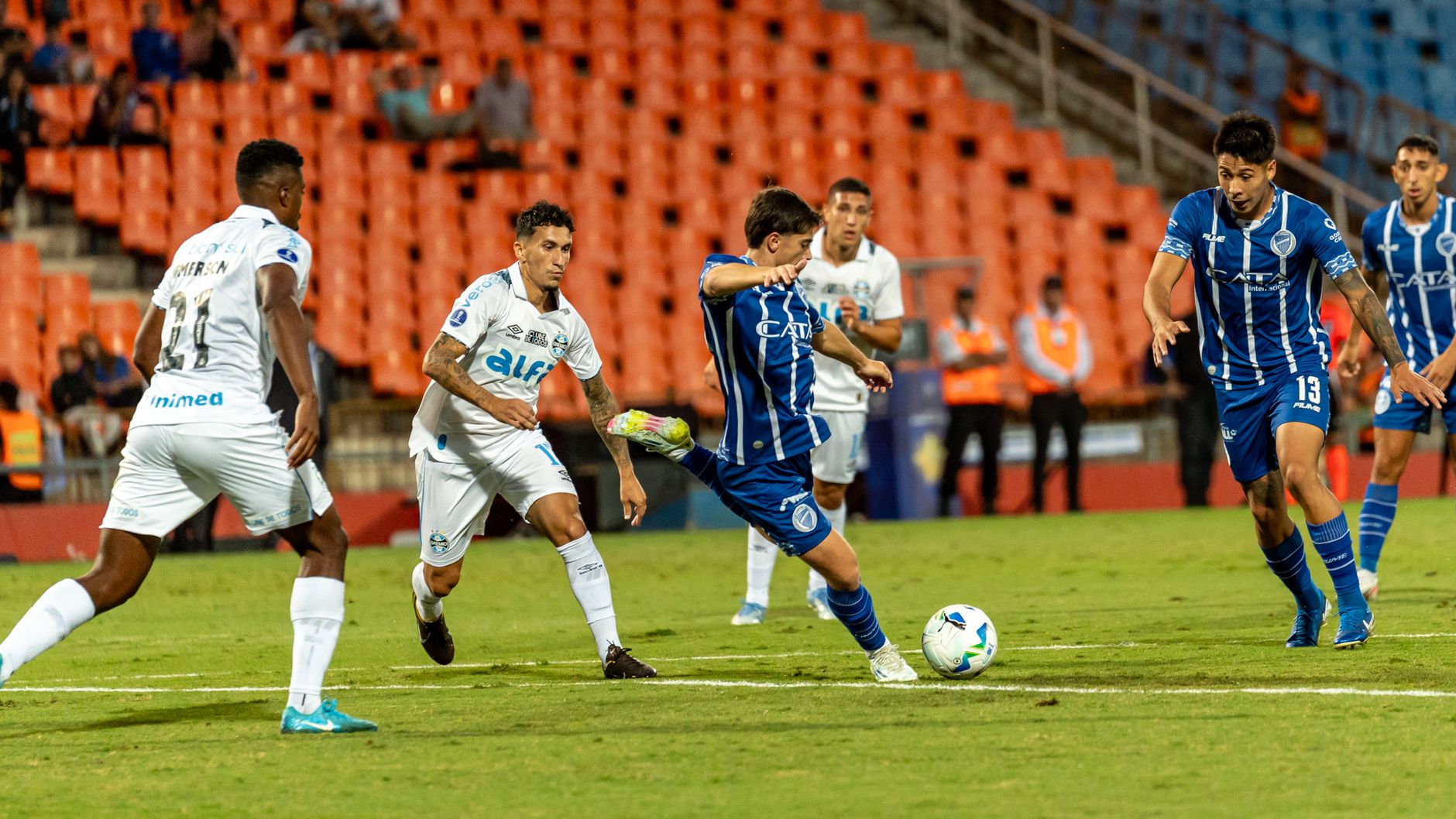
Photo by Franco Monsalvo on Pexels
Ready to follow FIFA World Cup 2026 with sharper match predictions, tactical notes, and data-led tournament coverage?
Frequently Asked Questions
Q: What is the FIFA World Cup?
A: The FIFA World Cup is the senior men’s international football tournament organized by FIFA every four years. It began in 1930 in Uruguay and has become the most watched national-team football competition in the world. The 2026 edition will feature 48 teams and will be hosted by the United States, Canada, and Mexico.
Q: How does the FIFA World Cup 2026 format work?
A: The FIFA World Cup 2026 format uses 48 teams, 12 groups of four, and a 32-team knockout stage. The top two teams in each group qualify automatically, while the eight best third-place teams also advance. This creates 104 matches and makes goal difference, rotation, and third-place standings more important than in earlier 32-team tournaments.
Q: What is the difference between the FIFA World Cup and continental tournaments?
A: The FIFA World Cup brings together qualified national teams from every FIFA confederation, while continental tournaments are limited to regions such as UEFA, CONMEBOL, CAF, AFC, Concacaf, or OFC. The World Cup has broader stylistic variety and greater global visibility. Continental events can still be tactically stronger in certain regions because teams often know each other better.
Q: Is the FIFA World Cup useful for betting analysis?
A: The FIFA World Cup can be useful for betting analysis, but only if you account for short-sample volatility and changing incentives. Team reputation alone is not enough because lineups, travel, suspensions, and group-stage qualification scenarios can shift quickly. Pitch Notes focuses on tactical matchups, player statistics, and market context rather than one-dimensional predictions.
Q: Why do World Cup predictions fail so often?
A: World Cup predictions fail because the tournament is short, emotional, and highly sensitive to single-match events. Penalties, red cards, injuries, VAR decisions, and rotation can overturn even strong pre-match models. The best approach is to update predictions throughout the tournament instead of relying on static rankings made months before kickoff.
Q: How much does it cost to follow FIFA World Cup coverage on Pitch Notes?
A: Pitch Notes provides FIFA World Cup focused content for fans seeking predictions, tactics, player stats, and tournament coverage. Availability and access details may vary by product page, content type, and market. The practical first step is to visit Pitch Notes directly and review current coverage options before the 2026 tournament begins.
Thank you for reading.
Pitch Notes · Latest Insights