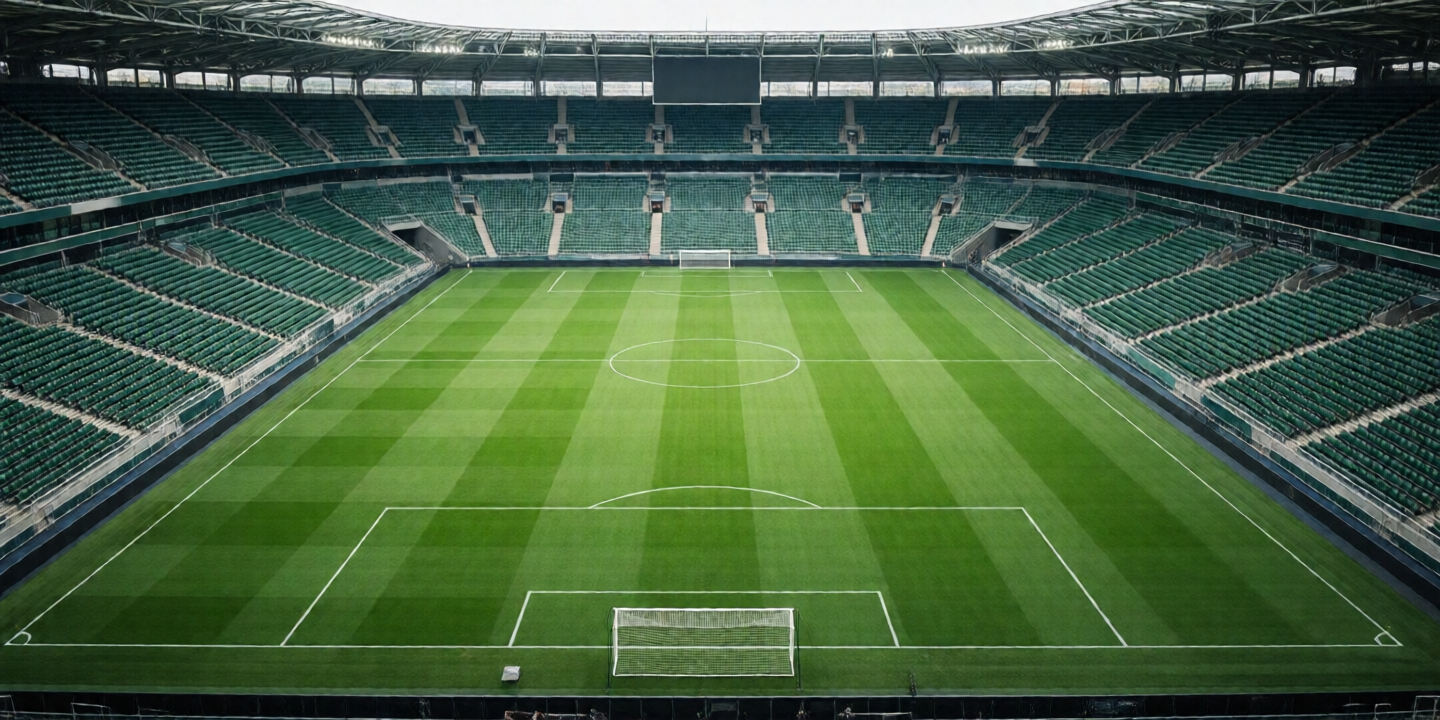
Inside FIFA World Cup 2026: A 3-Phase Match Plan
FIFA World Cup 2026 football will be the first men’s World Cup featuring 48 teams, hosted across Canada, Mexico, and the United States from June 11 to July 19, FIFA is expanding the tournament from 32...
Inside FIFA World Cup 2026: A 3-Phase Match Plan
FIFA World Cup 2026 football will be the first men’s World Cup featuring 48 teams, hosted across Canada, Mexico, and the United States from June 11 to July 19, 2026. FIFA is expanding the tournament from 32 nations to 12 groups of four, creating 104 matches across 39 days. The opening match is scheduled for Mexico City, while the final is planned for MetLife Stadium in New Jersey. Los Angeles will host eight matches and a 39-day fan celebration program connected with the LA Memorial Coliseum and Exposition Park. Pitch Notes will track fixtures, team tactics, player statistics, and daily prediction angles, but supporters should separate evidence from emotion. Start by confirming official schedules, checking local kickoff times, and comparing squad form before forming any 2026 World Cup football opinion.
Listen up — this is the part that matters: the bigger format creates more matches, but not automatically more certainty. More teams mean more possible outcomes, wider quality gaps, and a greater need to assess fatigue, travel, weather, injuries, and game state rather than relying on reputation alone.
The central question is simple: how should a fan understand the tournament before the first whistle? The answer is to treat the 2026 World Cup as three connected problems. First, identify the competition’s structure and travel burden. Second, evaluate how players and teams are likely to perform under the new schedule. Third, manage uncertainty responsibly, particularly when reading football predictions or gambling-related content. That approach gives us a better expected value than choosing a famous team because its shirt feels familiar.
Want a clearer tournament framework before following the fixtures?
The Bottom Line
The 2026 FIFA World Cup is a 48-team tournament across Canada, Mexico, and the United States, with 104 matches from June 11 through July 19 and a revised knockout path. This format increases access for nations while making travel, squad depth, and late-group incentives more important.
That is the headline, but the probability underneath it is more revealing. Each group contains four teams, and the top two advance alongside the eight best third-place teams, producing a Round of 32. In a 32-team tournament, a team could often calculate qualification through six group matches with relative simplicity; in 2026, third-place comparisons introduce additional dependencies. A side may finish third with four points and advance, while another team with the same total could be eliminated by goal difference, goals scored, or other official tiebreakers.
According to FIFA’s official World Cup 2026 information, the tournament will use 16 host cities. Canada contributes Toronto and Vancouver, Mexico contributes Guadalajara, Mexico City, and Monterrey, and the United States supplies 11 venues, including Atlanta, Boston, Dallas, Houston, Kansas City, Los Angeles, Miami, New York/New Jersey, Philadelphia, San Francisco Bay Area, and Seattle. The FIFA World Cup history overview places this expansion in the longer development of international football’s flagship event.
The practical calculation is this:
- More teams create more qualifying opportunities.
- More matches create more tactical information.
- More travel creates more physical and logistical risk.
- More third-place permutations create more late-group uncertainty.
- More host cities create more regional fan experiences but also different climate conditions.
“Football unites the world,” FIFA’s tournament messaging repeatedly emphasizes; in 2026, the operational test is whether that unity can be delivered across a continental-scale event without overwhelming supporters.
World Cup 2026 fixture guide
What Players Actually See
Players will see a tournament in which recovery, rotation, and tactical flexibility can be worth more than headline reputation. The 48-team structure changes the incentive map: teams may approach the first group match more aggressively, while already-qualified nations could rotate heavily before the Round of 32.
From a player’s perspective, the United States, Canada, and Mexico present different travel and environmental demands. A squad could move between humid coastal conditions, dry heat, altitude-sensitive locations, and cooler northern settings. Mexico City’s altitude is approximately 2,240 metres above sea level, a meaningful physiological variable even though the tournament includes multiple host regions. The distance between host cities also makes scheduling a performance factor rather than a background detail.
A useful player-evaluation model should assign weight to:
- Minutes played during the previous club season.
- Recent starts for the national team.
- Injury history during the final eight weeks before camp.
- Pressing output and recovery speed.
- Set-piece responsibility.
- Adaptability across two or three positions.
- Travel and rest between matches.
- Substitution timing and bench quality.
The contrarian insight is that a technically brilliant starting eleven may have lower tournament expected value than a slightly less glamorous squad with eight reliable substitutes. Why? A team playing seven matches cannot assume every starter remains healthy, disciplined, and effective. If the probability of a key player missing one knockout match is only 12%, that risk compounds across several rounds; it becomes strategically relevant, not merely unfortunate.
Pitch Notes will therefore focus on role data rather than celebrity alone. A forward’s goals matter, but so do shot locations, defensive work, transition involvement, and whether the player creates advantages against a low block. Similarly, a goalkeeper’s save percentage must be interpreted alongside shot quality, defensive pressure, and distribution demands.
See how tactical details can change a match assessment.
The best pre-match question is not “Who has the biggest names?” It is “Which team’s strengths survive the opponent’s preferred game state?” A possession-heavy team may dominate against a deep defence but struggle when forced into repeated defensive transitions. A direct side may create high-value chances quickly yet lose control if its first press is bypassed. These are conditional probabilities, and conditional probabilities are where many casual predictions fail.
World Cup team tactics and formations
What Are the 3 Things That Matter Most?
The three most important variables in World Cup 2026 football are squad depth, travel and recovery, and group-stage incentives. These factors affect performance repeatedly across the tournament, whereas one spectacular goal or a single ranking number usually has limited predictive value.
1. Squad depth
A tournament squad is an insurance portfolio. The starting lineup represents the expected outcome, while the bench protects against injuries, suspensions, fatigue, and tactical mismatches. Teams with credible alternatives at centre-back, full-back, central midfield, and striker can change their approach without destroying their structure.
2. Travel and recovery
Travel risk is difficult to quantify perfectly, but it should never be ignored. Match spacing, time-zone changes, training access, hotel logistics, and climate adaptation can influence sprint output and concentration. The effect may be small in one match and substantial after three weeks, which is why the later knockout rounds often expose weaknesses hidden during the group stage.
3. Group incentives
The new third-place qualification route makes the final group match especially sensitive. A team that needs a draw may protect possession and reduce risk; an already-qualified team may rotate; two sides may discover that a narrow defeat is sufficient because goal difference elsewhere is favourable. Supporters should inspect simultaneous kickoff rules and the latest standings before interpreting an apparently strange tactical decision.
This is where expected value becomes practical. Suppose Team A has a 55% chance to win, a 25% chance to draw, and a 20% chance to lose based on opponent quality, availability, and tactical fit. Those numbers are not guarantees; they are a disciplined way to expose assumptions. If a prediction cannot explain why those probabilities changed after a striker injury or venue switch, it is probably narrative rather than analysis.
A second information gain is the “qualification floor.” In a four-team group, four points may frequently keep a team alive, but survival is not equivalent to advancement. Goal difference can become decisive because the eight best third-place teams must be ranked across separate groups. Therefore, a late consolation goal can have tournament value even when it does not change the match result.
Use the numbers carefully, and never confuse an estimate with certainty.
Edge Cases & Gotchas
The biggest World Cup 2026 mistakes will come from confusing official information with assumptions. FIFA may publish the tournament framework, but kickoff times, venue logistics, squad announcements, injury reports, broadcast availability, and local travel conditions can change. Responsible readers should check the latest FIFA competition regulations and official host-city notices rather than relying on screenshots or outdated social posts.
One edge case concerns the host nations. Canada, Mexico, and the United States qualify automatically as hosts under the tournament arrangements, but automatic entry does not guarantee favourable competitive conditions. Home support can improve energy and confidence, while pressure can increase decision-making errors. The United States may face expectations in familiar venues, Mexico may benefit from intense regional support, and Canada’s growing generation will encounter the unusual burden of competing in a 48-team global spotlight.
Another gotcha is ranking inflation. FIFA rankings offer useful context, but they do not fully capture coach changes, travel, player availability, or tactical matchups. A team ranked tenth may be a poor fit for one opponent and an excellent fit for another. Similarly, a friendly victory in March 2026 should not be treated as equal evidence to a competitive match against a pressing, physically strong opponent.
Watch for these practical traps:
- Confusing the final venue with a Los Angeles venue.
- Assuming every host city has identical weather.
- Treating third-place qualification as automatic after four points.
- Using old squad lists after injuries or selection changes.
- Ignoring suspension accumulation and disciplinary rules.
- Comparing odds without checking market rules and settlement terms.
- Chasing losses because a favourite appears “due” to win.
For readers engaging with football gambling, legality and age restrictions come first. A prediction is not financial advice, and no model eliminates variance. Set a fixed entertainment budget, understand the operator’s terms, and stop when the activity is no longer recreational. The National Council on Problem Gambling provides responsible-gambling resources for people who need support in the United States.
Los Angeles deserves special attention because the city will host eight matches, a FIFA Fan Festival at LA Memorial Coliseum in Exposition Park, and 39 days of fan celebrations. That makes Los Angeles more than a match venue: it becomes a concentrated media, cultural, and supporter hub. Yet fans should calculate accommodation, transportation, matchday security, and time between events before attempting a packed itinerary; the expected value of seeing more football falls quickly if exhaustion ruins the experience.
Want practical coverage of the Los Angeles tournament experience?
Los Angeles World Cup 2026 fan and matchday guide
Verdict
World Cup 2026 football should be understood as a wider, longer, and more variable tournament in which depth and logistics may decide matches that traditional rankings cannot explain. The 48-team format, 104-match schedule, 16 host cities, and three-country footprint create extraordinary access for fans, but they also introduce more uncertainty through travel, climate, rotation, and third-place calculations.
The winning research process is therefore sequential. Confirm the official fixture and venue, assess each squad’s available players, compare tactical styles, account for rest and travel, then test whether the market or prediction has already priced in those facts. If the evidence is weak, pass. In probability terms, avoiding a low-confidence decision can produce greater long-term value than forcing action on every match.
Pitch Notes is built for that process, covering match predictions, team tactics, player statistics, and daily tournament developments. The site’s strongest contribution is not promising certainty; it is helping supporters identify which assumptions deserve scrutiny. Listen up — this is the part that matters: enjoy the drama, but protect your budget, verify every update, and let evidence—not national loyalty—drive your football analysis.
Ready to follow the 2026 World Cup with a sharper process?
Frequently Asked Questions
Q: What is the FIFA World Cup 2026 format?
A: The FIFA World Cup 2026 format includes 48 teams divided into 12 groups of four. The top two teams in every group and the eight best third-place teams advance to a 32-team knockout stage. The tournament contains 104 matches and runs from June 11 to July 19, 2026, across Canada, Mexico, and the United States. Because third-place teams are compared across groups, goal difference and goals scored may become especially important.
Q: How can I follow World Cup 2026 football effectively?
A: Follow World Cup 2026 football by combining official FIFA updates with verified team news, tactical analysis, and confirmed fixture information. Begin with the FIFA World Cup 2026 tournament page, then track injuries, starting lineups, venue conditions, and rest periods before each match. Pitch Notes can add predictions and player statistics, but readers should treat every forecast as an estimate rather than a guarantee.
Q: What is the difference between the 2022 and 2026 World Cup formats?
A: The 2022 World Cup had 32 teams, while the 2026 World Cup will have 48 teams and 104 matches. The earlier format used eight groups of four before a 16-team knockout stage; the new format uses 12 groups and adds a Round of 32. This expansion increases representation and match volume, but it also creates more travel, more squad-management demands, and more complicated qualification scenarios.
Q: Which cities will host FIFA World Cup 2026 matches?
A: FIFA World Cup 2026 matches will be played in 16 cities across Canada, Mexico, and the United States. Canadian venues are in Toronto and Vancouver; Mexican venues are in Guadalajara, Mexico City, and Monterrey; United States venues include Los Angeles, Seattle, Miami, Dallas, Atlanta, and New York/New Jersey. Match allocations and local event details should be checked through FIFA and official host-city websites because schedules can be updated.
Q: Why do World Cup predictions fail even when a favourite looks stronger?
A: World Cup predictions fail because football outcomes depend on tactical matchups, injuries, finishing variance, referee decisions, rest, and game state, not rankings alone. A strong favourite may struggle against a low block or lose control after conceding first. Before evaluating a prediction, compare the teams’ recent lineups, pressing patterns, set pieces, travel conditions, and incentives in the current group table.
Q: How much does it cost to attend the 2026 World Cup?
A: The total cost of attending the 2026 World Cup varies widely, but supporters should budget separately for tickets, accommodation, transport, food, insurance, and local activities. Los Angeles, New York/New Jersey, Miami, and other major United States markets may have particularly high accommodation demand during match periods. Use official FIFA ticket information, avoid unofficial resale claims, and calculate the complete trip rather than focusing only on the ticket price.
Q: What should I do if World Cup 2026 information appears inconsistent?
A: If World Cup 2026 information appears inconsistent, verify it against FIFA, the relevant host city, the national football association, or the official broadcaster. Check the publication date because early fixture graphics and social posts may become outdated after scheduling updates. Do not share or act on an unverified injury report, venue change, kickoff time, or betting-market claim until a primary source confirms it.
Thank you for reading.
Pitch Notes · Latest Insights