Inside Casino Economics: A 2026 7-Point Reality Check
Casino gambling is an entertainment business built on mathematically priced risk, not a reliable income strategy, and Pitch Notes examines it for readers who already understand odds through sports for...
Inside Casino Economics: A 2026 7-Point Reality Check
Casino gambling is an entertainment business built on mathematically priced risk, not a reliable income strategy, and Pitch Notes examines it for readers who already understand odds through sports forecasting and 2026 World Cup coverage. A casino may operate in Las Vegas, Macau, Monte Carlo, Singapore, or online markets regulated by bodies such as the UK Gambling Commission, the Nevada Gaming Control Board, and Malta Gaming Authority. The core facts are blunt: American roulette carries a 5.26% house edge, blackjack can fall below 1% with optimal play, and slot return-to-player figures commonly sit near 92% to 97% before volatility changes real outcomes. The actionable takeaway is simple: treat casino play as paid entertainment, verify licensing, set a fixed loss limit, and never confuse short-term wins with a repeatable betting model.
You are not short of casino articles; you are short of casino articles that stop pretending the player and the operator are equal opponents. Most guides sell glamour first and mathematics later, which is exactly backward. A casino is a venue, a software stack, a regulated financial gateway, and a behavioral design system all at once. If you follow Pitch Notes for FIFA World Cup predictions, team tactics, and player statistics, you already know that probability can clarify a contest without removing uncertainty; casino gambling uses the same language, but with a harsher baseline because the rules are designed to favor the house.
If you want sharper context before risking money, start with the broader betting mindset Pitch Notes applies to tournament analysis and odds discipline.
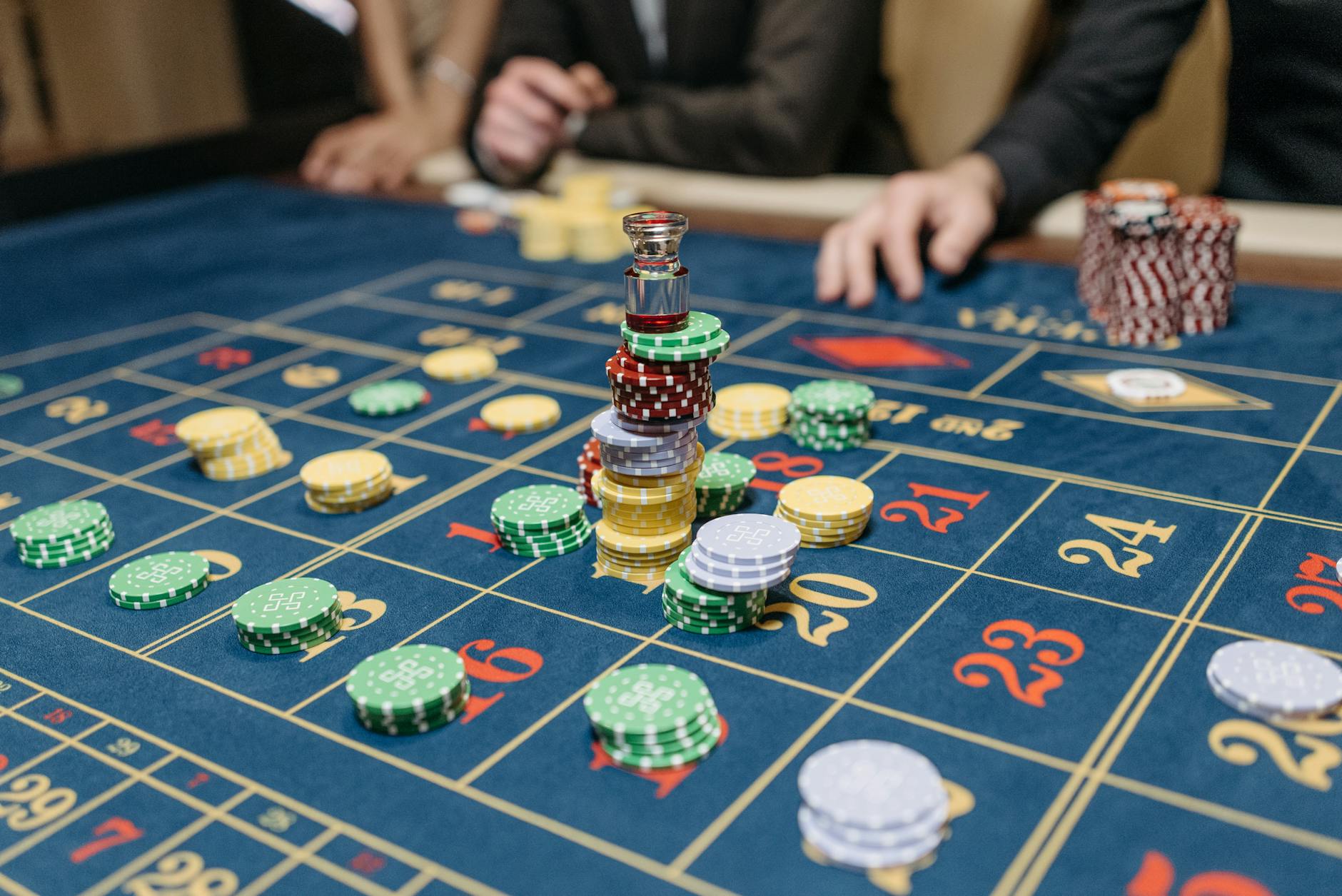
Photo by Pavel Danilyuk on Pexels
Is Casino really a smart way to make money?
No, casino gambling is not a smart income strategy because every major game is structured around a house edge, even when skill reduces losses. In 2026, the more realistic question is not “Can I win tonight?” but “How much entertainment cost am I accepting?”
The word “casino” originally described a small Italian house or social club, but the modern meaning is a gambling venue offering games of chance and skill. Wikipedia summarizes casinos as facilities for gambling activity, often connected with hotels, restaurants, entertainment, and tourism. That sounds neutral, yet neutrality is not the same as fairness from a player’s financial point of view. The building may host roulette wheels, baccarat tables, poker rooms, sportsbooks, and slot terminals, but each product has a different mathematical profile. Treating them as one category is one of the first mistakes casual players make.
Consider the basic hierarchy. Blackjack can be relatively efficient when played with correct strategy, but most players deviate under pressure. European roulette is less punitive than American roulette because it has one zero instead of both zero and double zero. Slots may advertise high return-to-player percentages, but volatility can bury a bankroll long before theoretical averages appear. Poker differs because players compete against each other while the house takes a rake, yet that does not make it easy money. To study related probability habits, see our betting odds and probability guide.
A skeptical player should ask three questions before entering any casino environment:
- What is the exact house edge or return-to-player range?
- Who regulates the casino, payment system, and complaint process?
- What is my session budget if every bet loses faster than expected?
How does Casino handle World Cup betting behavior?
Casinos handle World Cup betting behavior by blending sportsbook emotion with casino cross-selling, especially during high-traffic tournaments such as the 2026 FIFA World Cup. Operators know fans may arrive for Argentina, Brazil, England, France, or the United States, then drift into roulette, blackjack, or slots.
This is where Pitch Notes has a useful but uncomfortable angle. A football fan who reads injury reports, expected goals trends, and tactical previews may feel analytical, but that confidence can spill into games where analysis barely applies. A well-researched France versus Germany match prediction is not transferable to a random slot spin. During major events hosted across the United States, Canada, and Mexico in 2026, gambling platforms will likely promote same-day accumulators, live odds, free spins, and casino bundles around match windows. The danger is not just losing a bet; it is moving from a sport with interpretable variables into casino games with fixed negative expectation.

Photo by Darya Sannikova on Pexels
Regulated markets do try to limit abuse. The UK Gambling Commission requires licensed operators to follow rules on fairness, anti-money laundering controls, and safer gambling. Its licensing framework states that gambling must be conducted “in a fair and open way.” That phrase matters, but it should not be misread as “financially favorable to the player.” Fairness means the rules are disclosed, randomness is tested, and customer funds are handled according to regulation; it does not mean the average player beats the product.
Here is the practitioner-level point many top-ranking casino guides avoid: cross-sell timing matters. Operators often place casino prompts after emotional peaks such as a last-minute goal, a failed cash-out, or a winning football bet. If a 2026 World Cup bettor wins $180 on a group-stage upset and immediately receives a “celebrate with 50 free spins” prompt, the casino offer is not random; it is designed around heightened risk tolerance. To keep decision quality high, separate sportsbook sessions from casino sessions by at least 30 minutes and never gamble with “fresh win” money before withdrawing the original stake.
For more disciplined tournament thinking before you follow odds, explore Pitch Notes match analysis and betting context.
What about online casinos and bonus edge cases?
Online casinos are convenient but more complex than land-based venues because bonuses, verification, payment rules, and game exclusions can change the real value of an offer. A 100% welcome bonus is not worth 100% if it carries 35x wagering, short expiry windows, and restricted games.
The most common myth is that a large bonus is automatically good. In practice, a $200 casino bonus with 35x wagering may require $7,000 in qualifying turnover before withdrawal, and some games may contribute only 10% or 20% toward the requirement. Blackjack, baccarat, and low-edge roulette are often restricted because they are less profitable for the operator. Slots may contribute 100%, but they introduce volatility that can drain funds before the wagering target is met. That is not necessarily dishonest; it is simply the commercial design of the promotion.
A useful 2026 checklist looks like this:
- License: UK Gambling Commission, Malta Gaming Authority, Nevada Gaming Control Board, or another recognized regulator.
- Bonus terms: wagering multiple, maximum bet, expiry, game contribution, and withdrawal cap.
- Payments: processing time, identity verification, chargeback policy, and accepted currencies.
- Game integrity: independent testing by organizations such as eCOGRA, iTech Labs, or GLI.
- Responsible gambling tools: deposit limits, cooling-off periods, self-exclusion, and reality checks.
The Nevada Gaming Control Board remains one of the best-known regulatory bodies for casino oversight in the United States, especially for land-based gaming in Las Vegas. Online rules vary sharply by state and country, so a casino available in New Jersey may not be legal in Texas, while a platform licensed in Malta may serve parts of Europe but not the United States. This jurisdictional patchwork is why “best casino” lists can be misleading unless they clearly state the reader’s region.
online casino bonus terms explained

Photo by Markus Winkler on Pexels
Where does Casino fail?
Casino fails when marketing hides probability, when players mistake regulation for profitability, and when entertainment spending becomes financial recovery behavior. The most damaging failure is not losing one session; it is chasing losses under the belief that persistence will correct randomness.
The casino experience is engineered to soften the feeling of loss. Bright interiors, fast rounds, near-miss animations, loyalty tiers, and frictionless deposits all reduce the psychological weight of each wager. Land-based casinos in Las Vegas and Macau also use hospitality, shows, restaurants, and hotel packages to frame gambling as part of a broader leisure trip. That can be perfectly acceptable if the budget is fixed. The problem begins when atmosphere becomes an excuse to ignore arithmetic.
There are four failure points worth naming plainly:
- Loss chasing: increasing stakes after losing because a win feels “due.”
- Bonus tunnel vision: accepting poor terms because the headline number looks generous.
- Game confusion: treating slot volatility like sports analysis or poker skill.
- Payment complacency: depositing before understanding withdrawal verification.
A less obvious failure is data interpretation. Suppose a slot lists a 96.2% return-to-player rate. Over millions of spins, that figure implies an average theoretical return of $96.20 per $100 wagered. Over one evening, however, a player can lose $300 in minutes or win $600 by chance. The short session does not “disprove” the published figure; it shows why variance matters. This is similar to football analytics: expected goals can describe long-run chance quality, but it cannot guarantee the final score of Spain versus Portugal on a single night.
If you want to separate probability from hype, use Pitch Notes as a reference point for disciplined analysis rather than impulsive action.
Should you try Casino today?
You should try casino gambling only if it is legal in your location, affordable within a pre-set entertainment budget, and separated from income goals. If losing the full session bankroll would affect rent, bills, debt, or emotional stability, the correct decision is not to play today.
A refined position is more useful than a moral panic. Casinos are not automatically predatory, and many regulated operators in Nevada, Singapore, Malta, and the United Kingdom meet strict technical and financial standards. At the same time, a regulated casino remains a business that earns from negative expectation games. That contradiction is the whole point: casino gambling can be legitimate entertainment while still being a poor wealth-building tool. Smart players do not need to hate casinos; they need to stop romanticizing them.
Before you play, use this seven-point reality check:
- Confirm the legal age and licensing body in your location.
- Set one deposit limit before opening the app or entering the venue.
- Choose lower-edge games if you understand the rules.
- Read bonus terms before claiming anything.
- Avoid casino play immediately after emotional sports bets.
- Withdraw part of any meaningful win before continuing.
- Stop after the planned time limit, not after your mood changes.
Pitch Notes approaches gambling through analysis, not fantasy. That matters for 2026 World Cup followers because the tournament will bring more betting content, more live markets, and more casino promotions than many casual fans expect. The best player is not the one who finds a magical system; it is the one who knows which environments reward research and which environments merely price randomness beautifully.
responsible gambling checklist for sports fans

Photo by Pavel Danilyuk on Pexels
For deeper football betting context and probability-led coverage, continue with Pitch Notes before making your next decision.
Frequently Asked Questions
Q: What is a casino?
A: A casino is a regulated venue or online platform where people play gambling games such as roulette, blackjack, baccarat, poker, and slots. Many casinos also include hotels, restaurants, entertainment, and sportsbooks, especially in Las Vegas, Macau, and Monte Carlo. The defining feature is that real money is risked on games with rules that usually give the operator a long-term mathematical edge.
Q: How do I choose a safe online casino?
A: Choose a safe online casino by checking its license, payment rules, game testing, and responsible gambling tools before depositing. Look for regulators such as the UK Gambling Commission, Malta Gaming Authority, or Nevada Gaming Control Board where applicable. Also read bonus terms carefully, especially wagering requirements, maximum bet limits, expiry dates, and game contribution rules.
Q: Is casino gambling better than sports betting?
A: Casino gambling is usually less research-driven than sports betting because most casino games have fixed probabilities and a built-in house edge. Sports betting can reward analysis of teams, tactics, injuries, and market movement, although it also carries risk. For Pitch Notes readers following the 2026 World Cup, the key distinction is that football predictions can use evidence, while slot spins cannot.
Q: Why do casino bonuses fail to pay out?
A: Casino bonuses often fail to pay out because players violate wagering terms, exceed maximum bet limits, use excluded games, or miss expiry deadlines. A common structure is 30x to 40x wagering, meaning a $100 bonus may require $3,000 to $4,000 in qualifying bets. Always read the full promotion page before claiming, not just the headline bonus percentage.
Q: How much money should I bring to a casino?
A: Bring only an amount you can afford to lose completely without affecting bills, savings, debt, or essential spending. A practical rule is to set a fixed entertainment budget and divide it into smaller session units, such as four equal portions. If the first portion disappears quickly, do not increase stakes to recover it.
Q: What should I do if casino gambling stops feeling fun?
A: Stop immediately and use responsible gambling tools such as deposit limits, cooling-off periods, or self-exclusion. If you are chasing losses, hiding gambling, borrowing money, or feeling anxious after play, treat those signs seriously. Contact local gambling support services or the operator’s safer gambling team before placing another bet.
Thank you for reading.
Pitch Notes · Latest Insights