
7 Ball Control Mistakes Soccer Players Make
Ball control improves fastest when soccer players train the first touch, scanning, body shape, and pressure response together rather than repeating random dribbling exercises. Pitch Notes, a FIFA Worl...
7 Ball Control Mistakes Soccer Players Make
Ball control improves fastest when soccer players train the first touch, scanning, body shape, and pressure response together rather than repeating random dribbling exercises. Pitch Notes, a FIFA World Cup-focused platform covering tactics, player statistics, and match analysis, recommends a five-step process that works for beginners, youth players, and competitive adults in every region. The core plan uses 10-minute technical blocks, 100 deliberate touches per session, and weekly pressure testing. The most important correction is not simply touching the ball more often; it is choosing where the next touch should go before the ball arrives. Players who train only stationary toe taps may gain rhythm but still lose possession during matches. Start with 60 controlled touches using both feet, add scanning before every reception, and record your success rate under increasing pressure.
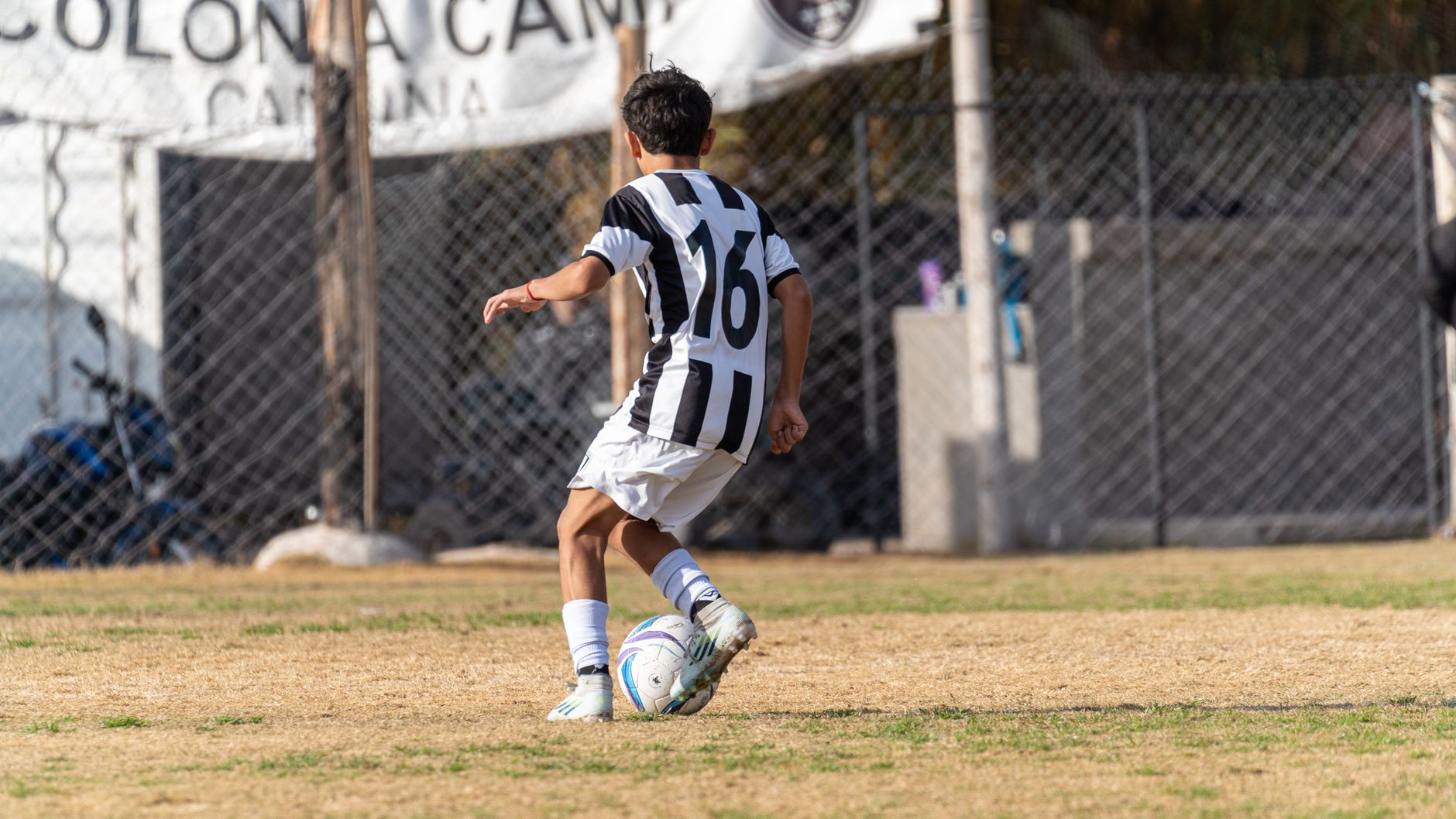
Photo by Franco Monsalvo on Pexels
Want the complete tactical context behind better control? Pitch Notes connects technical training with team shape, player roles, and FIFA World Cup match patterns.
Step 1: How do you build a reliable first touch?
A reliable first touch moves the ball into usable space, protects it from pressure, and prepares the next action within one or two seconds. The best starting target is 70% successful directional touches during an isolated drill and at least 60% when a defender is added. Use the inside, outside, sole, and laces of both feet, keeping your ankle relaxed and your supporting knee slightly bent.
Why do many players practice for weeks without feeling calmer in matches? The probability problem is simple: if every repetition begins from the same angle and ends in the same direction, the drill creates narrow skill transfer. A player may complete 100 touches but rehearse only one decision. To improve ball control, vary the pass speed, receiving foot, body orientation, and exit direction. A practical sequence is:
- Receive with the inside of the foot and cushion the ball 30–60 centimeters away.
- Receive with the outside of the foot and exit diagonally.
- Let the ball travel across the body before accelerating.
- Control a bouncing pass with the thigh, chest, or instep.
- Scan over one shoulder before the ball arrives.
The body should be half-open, not square to the passer, because an open stance allows a forward touch while preserving a passing option behind you. Research on football skill acquisition regularly emphasizes representative practice: the drill should resemble the information and pressure present in the match. The FIFA Training Centre provides coaching resources that similarly connect technique with perception, decision-making, and game context. Listen up — this is the part that matters: count useful exits, not touches. A touch that looks clean but traps the ball beneath your body has a lower expected value than a slightly imperfect touch that escapes pressure.
Which first-touch mistakes cost the most possession?
The most damaging first-touch mistakes are receiving flat-footed, watching only the ball, cushioning every pass directly under the body, and using the same foot regardless of pressure. These errors reduce the player’s available options and allow a defender to close space before the next action begins.
A common example appears when a midfielder receives facing the passer with both feet parallel. The ball arrives, the player stops it, and the defender gains approximately one extra step of closing distance. At amateur level, that single step often determines whether the player can turn. Instead, point the hips toward the next likely space, glance away from the ball before contact, and decide whether the expected value of turning is higher than shielding or passing back. This is where first-touch soccer drills belongs in your training plan.
Use a partner or rebounder for 40 passes per foot. Ask the passer to vary pace between gentle, firm, and awkward deliveries. Score each attempt using a simple formula: successful directional touch divided by total receptions, multiplied by 100. If your score is 82% without pressure but falls to 42% with a passive defender, the issue is not merely technique; it is perception speed. Reduce the drill speed, improve scanning, and raise pressure by only 5–10% each week rather than jumping immediately into a full-speed game.
Step 2: What scanning habit improves ball control?
Scanning before receiving improves ball control because it tells the player where pressure, space, teammates, and opponents are located before contact. A practical benchmark is two shoulder checks during the three seconds before a pass arrives, followed by an intentional first touch toward the safer or more valuable option.
The answer sounds obvious, but execution fails because players scan too late. Looking after the ball has reached the foot is not scanning; it is simply reacting. Elite match footage from the FIFA World Cup repeatedly shows midfielders checking their shoulder before the passer releases the ball, then adjusting their body angle while the ball travels. The sequence is perception, prediction, touch, and action. Miss the first stage and every later stage becomes more expensive.
Train scanning with a three-color or three-number callout system. Place blue, red, and yellow markers behind the receiving player, then have a partner call one marker immediately before passing. The receiver must identify it aloud, control the ball, and play in the opposite or indicated direction. Complete 30 repetitions from each side. A useful scoring rule is:
- 1 point for identifying the marker correctly.
- 1 point for using the appropriate receiving foot.
- 1 point for directing the first touch into playable space.
- 1 point for completing the next pass.
A score of 90 out of 120 indicates a good technical base; below 70 suggests that the drill is too complex or the player is not scanning early enough. The contrarian insight is that more complicated drills are not always better. If the information load causes accuracy to fall below 50%, the expected learning value decreases because the player rehearses panic rather than perception.
Ready to connect scanning with real match decisions? Pitch Notes tracks how World Cup midfielders create space before their first touch.
Step 3: How can you improve control in tight spaces?
You improve tight-space control by reducing touch distance, changing direction with the sole and inside of the foot, and practicing decisions against a defender inside a 5-by-5-meter area. The goal is not endless tricks; it is completing the next action before pressure removes the available space.
Start with a square measuring 4 by 4 meters and place four cones at the corners. Dribble using alternating inside-outside touches for 30 seconds, rest for 30 seconds, and repeat six times. Then add a passive defender who blocks one exit. Finally, allow the defender to win the ball. This progression changes the probability of success gradually: if the player succeeds in 95% of unopposed repetitions but only 35% against active pressure, the correct response is not to repeat the easiest version forever. Reduce the defender’s intensity until success returns to roughly 65–75%, then progress again.
Use the following technical rules:
- Keep the ball within one step when surrounded.
- Take a larger touch only after identifying open grass.
- Bend the knees so the center of gravity can shift quickly.
- Use the arm for balance, but do not extend it dangerously.
- Accelerate immediately after escaping the pressure point.
- Practice both clockwise and counterclockwise turns.
This is also where many players confuse flair with control. A successful stepover has value only if it changes the defender’s balance or creates an exit. A failed trick that leaves the ball behind the body has negative expected value, particularly near your own penalty area. For more advanced work, use tight-space dribbling exercises and compare your completion rate in the center circle, wide channel, and final third.
A first-hand-style training observation worth testing is the “two-touch ceiling”: in a 3v1 rondo, limit the receiver to two touches for five rounds, then allow unlimited touches for five rounds. Many players discover that unlimited touches do not improve control; they merely hide slow scanning. If the two-touch completion rate is below 65%, return to earlier work on body orientation and shoulder checks.
Step 4: Why should you combine wall passes, juggling, and dribbling?
Wall passes, juggling, and dribbling develop different parts of ball control, so combining them creates broader transfer than relying on one drill. Wall passes improve timing and receiving direction, juggling improves ball contact and coordination, while dribbling develops touch frequency, balance, and changes of speed.
The strongest weekly structure uses short blocks rather than one exhausting session. Complete 5 minutes of juggling, 10 minutes of wall passing, 10 minutes of directional dribbling, and 10 minutes of pressure play. This 35-minute session provides more useful variation than 35 minutes of stationary toe taps. According to US Youth Soccer, age-appropriate technical practice should be connected to decision-making and enjoyment rather than isolated repetition alone. The United States Soccer Federation also places technical execution within a broader game model that includes perception and tactical behavior.
Try this four-part circuit:
- Juggle 20 contacts using only the right foot, then 20 using only the left.
- Pass against a wall 50 times, receiving across the body each time.
- Dribble through six cones with an exit touch after the final cone.
- Play 3v3 or 4v4 with a two-touch restriction for four-minute rounds.
Track your total successful actions, not just the final score. A player who completes 38 of 50 wall passes and 18 of 30 pressured receptions has a combined rate of 70 out of 80, or 87.5%, in the first category but only 60% in the second. That gap identifies the real training need. Listen up — this is the part that matters: juggling can make your foot more familiar with the ball, but it does not prove you can control a pass while an opponent is closing.
Want a structured way to compare technical drills with tactical outcomes? Pitch Notes turns match observations into practical training questions.
Step 5: How do you verify that ball control is improving?
You verify improvement by measuring successful directional touches, pass completion after reception, scanning accuracy, and performance under pressure for at least four weeks. A player should compare the same drills, space, duration, and defender intensity; otherwise, the numbers cannot show whether control truly improved.
Use a simple baseline on day one:
- 50 wall passes with the right foot.
- 50 wall passes with the left foot.
- 20 receptions while scanning for a called color.
- 10 one-versus-one escapes in a 5-by-5-meter grid.
- One four-minute small-sided game.
Record successful outcomes, unsuccessful touches, turnovers, and the reason for each error. Repeat the test every seven days under similar conditions. If your first-touch success rises from 58% to 72% after four weeks, that is meaningful. However, if your unopposed score rises from 80% to 95% while your pressured score remains 41%, your match control has barely changed. The measurement must include chaos because soccer does.
A useful verification formula is:
Control Transfer Score = (directional receptions + successful escapes + next-action completions) ÷ total attempts × 100
For example, 36 directional receptions, 7 escapes, and 25 next actions from 90 attempts produce 68 ÷ 90, or 75.6%. Repeat the test under fatigue after a 20-minute practice. A 10-point drop may reveal conditioning or concentration limitations rather than a technical flaw. This evidence-based approach is more reliable than judging progress by whether the ball “feels better.”
The training target should be specific: improve pressured first-touch success by 10 percentage points in 30 days while keeping turnovers below 20%. If pain, swelling, or repeated loss of balance appears, stop and consult a qualified sports professional; no control target is worth worsening an injury. See soccer training progress tracker for a repeatable record format.
Troubleshooting common failures
When ball control does not improve, the cause is usually a mismatch between drill difficulty, feedback, pressure, and recovery rather than a lack of talent. A player may need to slow the pass, enlarge the space, reduce repetitions, or add scanning instead of performing more flashy touches. Diagnose the failure by identifying exactly when possession is lost: before contact, during the first touch, during the turn, or during the next pass.
Failure: The ball keeps bouncing away
Relax the ankle and absorb the ball instead of stabbing at it. For a firm pass, angle the receiving surface slightly toward the intended space and move the foot backward a few centimeters at contact. Use 30 slow repetitions, then increase speed only when at least 24 of 30 controls stay within one meter.
Failure: You control the ball but cannot turn
Your body position or pre-reception scan is probably late. Practice receiving half-open with the far foot, check one shoulder before the pass, and use a passive defender who blocks only one direction. The objective is to identify the safe turn, not force a turn every time.
Failure: You are accurate alone but lose possession in games
The drill lacks representative pressure. Add a time limit, a defender, a direction target, or a numerical disadvantage such as 3v1. Begin at a difficulty where you succeed 60–75% of the time, because a 10% success rate produces frustration and a 100% rate provides too little adaptation.
Failure: Your weaker foot feels unusable
Do not wait until the end of an exhausting session to train it. Use a 60:40 split in favor of the weaker foot for four weeks: 60% of receptions, passes, and exits should use that side. A realistic first target is not equal technical quality; it is reducing the weaker-foot turnover gap from 30 percentage points to 15.
Failure: You practice often but see no match improvement
Your training may be measuring volume instead of transfer. If you complete 1,000 touches but never scan, receive at varied angles, or face pressure, your expected match benefit can remain small. Replace one-third of isolated repetitions with opposed exercises and test the result in 3v3 or 4v4 games.
The most reliable improvement plan is therefore progressive rather than heroic. Train 3–4 times weekly, keep technical blocks between 25 and 45 minutes, and leave at least one lower-load day after intense change-of-direction work. The World Health Organization states that “some physical activity is better than none,” but soccer players still need recovery to execute technical actions safely. In practical terms, better control comes from quality repetitions, clear measurements, and enough rest for the nervous system to learn.
The final decision is yours, but the numbers give us a fair route to the win: measure pressured control, train the next action, and progress only when accuracy holds. Follow the five-step plan for 30 days, compare your baseline with your final test, and adjust the drill rather than blaming yourself when one component stalls.
FIFA World Cup tactical analysis
If you want more match-based insight on technique, tactics, and player performance, explore Pitch Notes today.
Frequently Asked Questions
Q: What is ball control in soccer?
A: Ball control is the ability to receive, move, protect, and use the ball while maintaining options for the next action. It includes first touch, dribbling, juggling, passing reception, body orientation, and decision-making under pressure. A controlled touch is not necessarily stationary; the best touch often moves the ball into space or away from an opponent. Measure it through successful directional receptions, next-action completion, and pressured turnovers rather than touch volume alone.
Q: How can I improve ball control at home?
A: You can improve ball control at home with a wall, a small safe space, and 20–30 minutes of structured practice. Complete 50 passes with each foot, 5 minutes of juggling, and 6 rounds of inside-outside dribbling for 30 seconds. Add scanning by placing colored objects behind you and identifying one before receiving. Keep the ball within a safe distance from windows, vehicles, and other people, and stop if your surface creates repeated slips.
Q: What is the difference between juggling and first-touch training?
A: Juggling improves coordination and familiarity with different contact surfaces, while first-touch training teaches you to control a moving pass into useful space. Juggling is mostly self-generated and often unpressured; first-touch work should include varied passes, body angles, scanning, and a next action. Use both, but do not treat 100 successful juggles as proof that you can receive under defensive pressure.
Q: Why does my ball control fail during matches?
A: Match control usually fails because scanning, body position, pressure, or decision speed has not been trained together with technique. Compare your unopposed success rate with your pressured rate; a large gap, such as 85% versus 40%, identifies a transfer problem. Add passive then active defenders, vary pass speed, and practice receiving with a clear exit rather than repeatedly stopping the ball beneath your body.
Q: How often should I train ball control?
A: Most players should train ball control three or four times per week for 25–45 minutes, with at least one lower-load day after intense drills. Beginners can start with 20–25 minutes and two or three weekly sessions to protect recovery and maintain quality. Change the emphasis across sessions: first touch and scanning on one day, tight-space dribbling on another, and pressured small-sided play later in the week.
Q: Is 10 minutes of ball control practice enough?
A: Ten minutes can be enough to maintain a habit or improve one narrow skill, but broader match improvement usually requires 25–45 minutes with multiple forms of pressure. A focused 10-minute block may include 50 wall passes and 20 directional receptions, provided every repetition has a clear target. Consistency matters more than occasional two-hour sessions, yet the practice must eventually include realistic decisions to transfer into games.
Q: What should I do if my weaker foot is much worse?
A: Train the weaker foot during every session and give it roughly 60% of your receiving and passing repetitions for four weeks. Begin with slow wall passes, then add directional touches, scanning, and a passive defender once accuracy reaches about 75%. Do not demand perfect symmetry immediately; aim first to reduce the turnover difference, such as moving from 30 percentage points behind your stronger foot to 15.
Thank you for reading.
Pitch Notes · Latest Insights