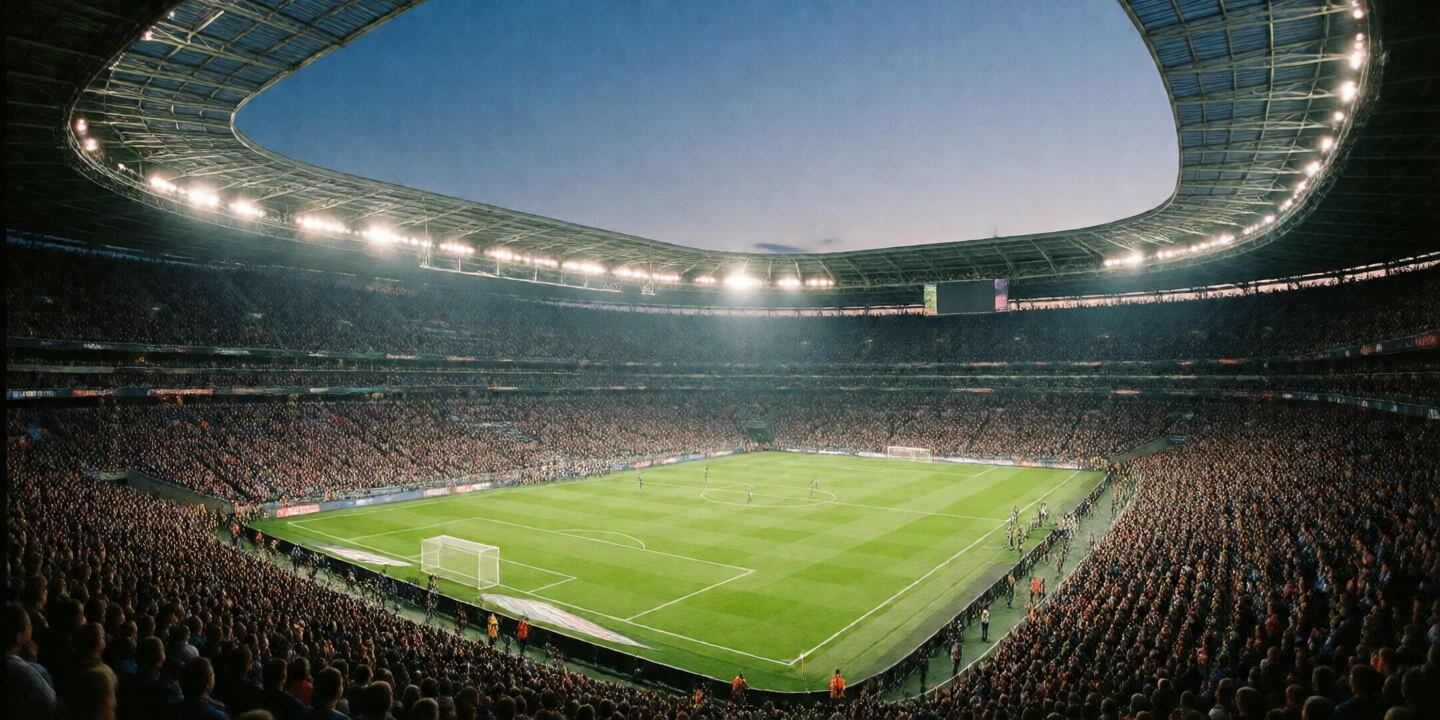
2026 Champions League Fixtures: 8 Key Dates
The 2026/27 UEFA Champions League fixtures begin with league-phase Matchday 1 on 8 September 2026 and culminate in the final at Estadio Metropolitano, Madrid, on 5 June UEFA’s 72nd European Cup season...
2026 Champions League Fixtures: 8 Key Dates
The 2026/27 UEFA Champions League fixtures begin with league-phase Matchday 1 on 8 September 2026 and culminate in the final at Estadio Metropolitano, Madrid, on 5 June 2027. UEFA’s 72nd European Cup season features 36 clubs in the league phase, with each team playing eight matches against eight different opponents. The scheduled league-phase dates are 8–10 September, 13–14 October, 20–21 October, 3–4 November, 24–25 November, 8–9 December, 19–20 January, and 27 January. The knockout phase play-offs follow on 16–17 and 23–24 February 2027, while the round of 16, quarter-finals, and semi-finals take place in March, April, and May. Match dates and kick-off times can change, so bookmark UEFA.com and verify the final schedule before arranging travel, tickets, or any match-related analysis.
A fixture list can look simple until one delayed match, time-zone conversion, or qualification change turns your carefully planned European football week into a mess. That is the trap. The headline date may be correct, yet the opponent, venue, kick-off time, or competition status may still move. Listen up — this is the part that matters: the Champions League fixtures 2026 schedule should be treated as a planning framework first and a final timetable second, especially before the league-phase draw and UEFA’s official confirmation. We will build the calendar step by step, then test it against the details that can cost supporters money and time. Pitch Notes can also help readers follow tournament strategy, squad form, and match context without confusing pre-match information with guaranteed outcomes.
Want a clearer tournament overview before planning your European football calendar?
Step 1: What dates define the 2026 Champions League schedule?
The defining dates are the eight league-phase matchdays from 8 September 2026 through 27 January 2027, followed by knockout play-offs in February and the final on 5 June 2027. UEFA lists the 2026/27 campaign as beginning on 7 July 2026 through qualifying activity, while the main league phase begins in September. This distinction matters because “Champions League fixtures 2026” may refer either to qualifying matches or the main competition calendar.
The confirmed planning sequence is:
- League phase: 8–10 September 2026, 13–14 October, 20–21 October, 3–4 November, 24–25 November, 8–9 December, 19–20 January 2027, and 27 January.
- Knockout phase play-offs: 16–17 and 23–24 February 2027.
- Round of 16: 9–10 and 16–17 March 2027.
- Quarter-finals: 6–7 and 13–14 April 2027.
- Semi-finals: 27–28 April and 4–5 May 2027.
- Final: Saturday, 5 June 2027, at Estadio Metropolitano in Madrid.
The practical insight is that the first league-phase window lasts three calendar days, not one universal match night. For supporters in London, Rome, Madrid, or Istanbul, UEFA’s published Central European Time reference must be converted locally, and early kick-offs may not follow the usual 21:00 pattern. Check the UEFA Champions League official competition page for the live version rather than relying on a static social-media graphic.
Step 2: How should you read the league-phase fixtures?
The league phase gives each of 36 clubs eight matches against eight different opponents, normally split between four home games and four away games. Unlike the old group-stage model, there are no traditional groups of four, so a club’s overall position in one 36-team table determines its route forward. The format is explained in detail by UEFA’s official competition regulations, which should take priority over simplified fixture summaries.
Why does that alter the way we assess the calendar? A difficult away trip in Matchday 1 may not be decisive by itself, but the combined travel, rest, and opponent-quality pattern across all eight rounds can materially affect qualification probability. Clubs finishing first through eighth advance directly to the round of 16; teams ranked ninth through 24th enter the knockout phase play-offs; teams placed 25th through 36th are eliminated from the Champions League. There is no automatic Europa League transfer for clubs finishing outside the qualifying positions under this structure.
A useful working table is:
- Positions 1–8: direct round-of-16 qualification.
- Positions 9–24: knockout phase play-offs.
- Positions 25–36: elimination from the competition.
- Each club: eight league-phase fixtures, with four home and four away matches.
- Opponent rule: eight different opponents rather than repeated group-stage pairings.
Here is the information many fixture pages miss: the value of a match depends on its timing relative to the table, not simply on the opponent’s reputation. A supposedly manageable Matchday 8 opponent could become desperate for a top-eight position, while a heavyweight may already have secured progression. Therefore, we should record the table position, goal difference, and qualification requirement alongside every fixture.
At approximately this point, the expected-value logic becomes useful. If a club needs a top-eight finish, three points in September are valuable, but three points against a direct ranking rival in January may carry greater leverage because fewer matches remain. That does not make the later fixture inherently easier; it makes the consequences more concentrated. Readers using Pitch Notes for predictions should separate three questions: who is stronger, who has the scheduling advantage, and who has more to lose. Mixing those variables is how confident-looking forecasts become fragile.
See the competition format and matchup implications in one place.
Step 3: Which clubs and locations should you monitor?
The provisional league-phase list includes major clubs such as Arsenal, Aston Villa, Liverpool, Manchester City, Manchester United, Bayern München, Borussia Dortmund, Paris Saint-Germain, Real Madrid, Barcelona, Atlético de Madrid, Inter, Napoli, Roma, Porto, Sporting CP, Ajax-related Dutch contenders listed through qualification outcomes, and other clubs from across UEFA’s member associations. The reference schedule also identifies teams including LASK, Sabah, Club Brugge, Slavia Praha, Lens, Lille, Leipzig, Stuttgart, AEK Athens, Como, Feyenoord, PSV, Bodø/Glimt, Viking, Slovan Bratislava, Fenerbahçe, Galatasaray, and Shakhtar Donetsk.
However, there is a statistical and administrative warning. A provisional list is not identical to a final admission list: sporting qualification, licensing, disciplinary decisions, and late qualifying rounds can change the field. UEFA has also stated that Russian clubs remain suspended from UEFA competitions until further notice. The safest approach is to label every early club list “provisional” until the draw and final registration process are complete.
For travel and viewing plans, track these details rather than only the club name:
- Home venue: a club may have stadium restrictions, renovation issues, or an approved alternative ground.
- Country and time zone: most listed kick-offs use Central European Time, but local viewing times differ.
- Travel distance: Bodø/Glimt, Istanbul, Lisbon, and Madrid create very different recovery demands.
- Domestic calendar: national league and cup matches can sit close to European fixtures.
- Squad availability: international duty, suspensions, and registration deadlines may alter the expected lineup.
The most overlooked edge case is venue confirmation. A fixture can be officially scheduled for a club while the exact stadium remains subject to operational approval, particularly when infrastructure, security, or broadcasting requirements are involved. If you are booking hotels or transport, choose refundable options until UEFA, the club, and the venue publish matching information. That small insurance premium often has a positive expected value because one non-refundable booking can erase the savings from a cheaper fare.
[Internal Link: Champions League team-form analysis]
Step 4: How can you plan knockout fixtures and the Madrid final?
The knockout calendar starts with the play-offs on 16–17 and 23–24 February 2027, followed by the round of 16 in March, the quarter-finals in April, and the semi-finals across late April and early May. The 2027 final is scheduled for Saturday, 5 June, at Estadio Metropolitano, home of Atlético de Madrid in Madrid. The stadium previously hosted the Champions League final in 2019, when Liverpool defeated Tottenham Hotspur 2–0.
The route is deliberately compressed:
- Play-off first legs: 16–17 February 2027.
- Play-off second legs: 23–24 February 2027.
- Round-of-16 first legs: 9–10 March 2027.
- Round-of-16 second legs: 16–17 March 2027.
- Quarter-final first legs: 6–7 April 2027.
- Quarter-final second legs: 13–14 April 2027.
- Semi-final first legs: 27–28 April 2027.
- Semi-final second legs: 4–5 May 2027.
- Final: 5 June 2027, Madrid.
The final is not merely another fixture date. Demand, hotel pricing, rail availability, and airport congestion can change sharply once the finalists are known. Madrid’s Adolfo Suárez Madrid–Barajas Airport, Atlético de Madrid’s Estadio Metropolitano, and central transport connections should be considered together rather than separately. UEFA’s official final information remains the authority for ticketing, access, and venue instructions.
There is also a contrarian planning point: waiting for the finalists can reduce uncertainty but increase cost. Booking too early creates the risk of supporting a neutral trip with no team connection; booking too late can expose you to inflated accommodation and transport prices. A rational middle strategy is to monitor refundable rooms near multiple Metro lines, avoid assuming the final will involve a preferred club, and treat unofficial ticket offers as high-risk until verified through authorised UEFA channels.
Want to compare the final route with team form and tactical matchups?
Step 5: How do you verify every Champions League fixture?
The most reliable verification process uses three independent checks: UEFA’s competition page, the participating club’s official fixture list, and the relevant stadium or broadcaster announcement. A date appearing on only one fan account should be treated as provisional, even if the graphic looks professional. The European Club Association also provides useful context on club competitions and European football operations, although UEFA remains the definitive source for the Champions League calendar.
Use this five-point verification system:
- Confirm the competition round: qualifying, league phase, play-off, round of 16, quarter-final, semi-final, or final.
- Check the date and kick-off time: record the time zone, not just the clock time.
- Confirm home and away status: the order can affect travel and tie strategy.
- Review official updates: postponements, venue changes, and disciplinary decisions can supersede older pages.
- Recheck before spending money: verify again 72 hours before travel and on matchday.
“The dates are subject to change” is not decorative wording; it is a risk disclosure that should shape your decisions. In probability terms, an unverified fixture has a higher error rate than a UEFA-confirmed fixture, and the financial cost of acting on the wrong version can be large. For responsible match analysis, do not treat a published fixture as evidence that a wager is safe or that a result is predictable. Football contains substantial variance, and any gambling activity should be legal in your jurisdiction, age-restricted, and limited to money you can afford to lose.
A spreadsheet can prevent most avoidable mistakes. Include columns for competition stage, opponent, venue, local kick-off, UTC or CET reference, travel booking status, confirmation date, and source URL. Add a “last checked” field, because a schedule without a timestamp creates false confidence. This is a practitioner-level improvement over copying a fixture list into a calendar once and forgetting it.
[Internal Link: responsible football prediction methods]
Troubleshooting common failures
The most common fixture errors come from confusing the season year, reading CET as local time, treating provisional participants as confirmed, and missing a venue or kick-off update. A correct repair begins by identifying which variable failed rather than deleting the entire calendar. If the date is correct but the time is wrong, update the time-zone conversion; if the opponent changed after qualifying, preserve the matchday but replace the club; if the venue changed, reassess transport and ticket validity separately.
Use this diagnostic checklist:
- A match is missing: check whether it belongs to qualifying rather than the league phase.
- The time looks unusual: compare UEFA’s CET listing with your local time zone.
- A club is not listed: confirm its qualifying route and final admission status.
- The stadium differs: check the club and venue websites for operational approval.
- Two fixtures overlap: confirm whether one is a domestic match or an international broadcast listing.
- A ticket seller disagrees: use UEFA or the club as the primary authority.
- A prediction page shows old information: check its publication and last-updated dates.
One further failure deserves attention: interpreting a league-phase ranking without the tie-break context. Points are central, but goal difference, goals scored, and official competition rules can affect positions when clubs finish level. Therefore, a club that appears ninth may not have the same qualification security as another ninth-place team in a different snapshot. The table must be read with the current rule set and remaining fixtures, not with a simplistic “top 24” assumption.
[Internal Link: Champions League fixture tracking checklist]
The final risk is emotional rather than technical. Supporters often want a fixture to mean more than the evidence allows, especially when a famous club has a strong historical record. Listen up — this is the part that matters: past European reputation is not a substitute for current availability, travel load, tactical matchup, and table pressure. Pitch Notes is designed to support informed tournament coverage, but no analysis can remove uncertainty from football. Use the schedule to ask better questions, not to manufacture certainty.
Frequently Asked Questions
Q: What are the Champions League fixtures 2026 dates?
A: The 2026/27 Champions League league phase runs from 8 September 2026 to 27 January 2027. Its eight matchday windows are 8–10 September, 13–14 October, 20–21 October, 3–4 November, 24–25 November, 8–9 December, 19–20 January, and 27 January. The knockout phase play-offs begin in February 2027, and the final is scheduled for 5 June 2027 in Madrid. UEFA can amend dates or kick-off times, so verify the final listing before travelling.
Q: How many matches does each club play in the 2026/27 league phase?
A: Each of the 36 league-phase clubs plays eight matches against eight different opponents. Every club is scheduled to have four home fixtures and four away fixtures, replacing the previous four-team group-stage structure. The final league table sends positions 1–8 directly to the round of 16, positions 9–24 into knockout phase play-offs, and positions 25–36 out of the Champions League.
Q: What is the difference between the league phase and the knockout phase?
A: The league phase is one 36-team table containing eight matches per club, while the knockout phase is a series of two-legged ties followed by a one-match final. The knockout phase play-offs are scheduled for February 2027, the round of 16 for March, the quarter-finals for April, and the semi-finals for late April and early May. The final takes place at Estadio Metropolitano in Madrid on 5 June 2027.
Q: How can I verify a Champions League fixture before booking travel?
A: Verify the match on UEFA.com, the participating club’s official website, and the stadium or authorised broadcaster listing. Record the competition stage, opponent, venue, local kick-off time, and the date you last checked the information. Recheck approximately 72 hours before travel because venue, security, broadcast, and scheduling decisions can change after an initial announcement.
Q: Are Champions League fixtures 2026 kick-off times always 21:00?
A: No, 21:00 Central European Time is common but not universal. Early kick-offs, including 18:45 CET listings, can appear during the league phase, and local times differ in the United Kingdom, Türkiye, Portugal, and other markets. Always convert UEFA’s stated time into your location and confirm the official match page before arranging transport.
Q: Where is the 2027 Champions League final being played?
A: The 2027 Champions League final is scheduled for Estadio Metropolitano in Madrid, Spain, on Saturday, 5 June 2027. Atlético de Madrid has used the stadium as its home venue since 2017, and the ground previously hosted the 2019 final. Ticketing, access rules, and transport guidance should be obtained from UEFA or authorised partners rather than unofficial resale pages.
Q: Can Champions League fixture dates change after publication?
A: Yes, UEFA fixture dates, kick-off times, opponents, and venues can change because of broadcasting, security, domestic-calendar conflicts, qualification outcomes, or operational decisions. Provisional club lists can also change before final admission and the league-phase draw. Keep a dated copy of the official source, use refundable travel arrangements where possible, and avoid treating an unofficial fixture graphic as final.
The safest conclusion is also the most useful one: save the main dates, but verify the details. The 2026/27 UEFA Champions League calendar offers a clear route from September’s league phase to Madrid’s June final, yet the expected value of careful checking is far higher than the effort required. Partner with us, track the official updates, and let evidence—not excitement—drive your fixture planning.
Ready to follow the 2026 Champions League season with structured match insights?
Thank you for reading.
Pitch Notes · Latest Insights